
Content marketing is booming in 2025, with digital competition and audience expectations reaching all-time highs. Brands are investing more in tailored strategies, but the landscape is also full of new challenges and shifting trends.
This ultimate guide is designed for content marketers—whether you’re just starting or have years of experience. You’ll discover the latest trends, must-have skills, step-by-step frameworks, advanced tools, and predictions shaping the field this year.
Ready to unlock practical strategies and stay ahead in the fast-paced world of content marketing? Dive in and explore every insight to dominate the digital landscape in 2025.
The Evolving Role of Content Marketers in 2025
The landscape for content marketers is transforming rapidly in 2025. Content marketers are no longer just writers or editors—they are now strategic partners driving measurable business outcomes. With shifting consumer behavior, emerging technologies, and new performance expectations, the role of content marketers is more dynamic and cross-functional than ever.

Key Responsibilities and Expectations
Content marketers in 2025 juggle a broad range of duties. Their core responsibilities include developing strategy, creating high-value content, distributing assets across channels, and closely analyzing results.
They are expected to work seamlessly with SEO experts, social media managers, and analytics teams to ensure campaigns are cohesive and data-driven. There's a heightened focus on ROI, with 78% of organizations expecting content marketers to directly drive lead generation (Content Marketing Institute, 2024). For example, in SaaS companies, content marketers often manage the entire customer journey, from awareness to retention.
Emerging Content Formats and Channels
The content landscape is exploding with new formats and platforms. Short-form video, interactive experiences, and branded podcasts are now essential. AI-generated and hyper-personalized content are gaining traction, allowing content marketers to tailor messages at scale.
Expanding into platforms like TikTok, LinkedIn Newsletters, and Threads is crucial for reaching diverse audiences. Brands are also experimenting with AR filters and immersive media to stand out. Content marketers must be agile, adapting quickly to these evolving formats and channels.
Content Strategy Alignment with Business Goals
Modern content marketers must connect their efforts to larger business objectives. This means aligning content KPIs with revenue, customer acquisition, and brand growth. Integrating content with sales enablement and supporting product launches are now standard practices.
For instance, a B2B company boosted its sales pipeline by 40% by tightly coordinating content marketing with sales and product teams. Content marketers are expected to demonstrate how their strategies contribute to the bottom line, ensuring every asset serves a clear business purpose.
Data-Driven Decision Making
Today’s content marketers rely on sophisticated analytics and data visualization tools to inform every stage of content planning. A/B testing, audience segmentation, and advanced dashboards help them optimize content for maximum impact.
In fact, 64% of top-performing marketers use advanced analytics in their content decisions (HubSpot, 2024). To dive deeper into how analytics can drive success, explore this business intelligence and analytics resource. Data-driven strategies empower content marketers to continually refine their tactics for better results.
Upskilling and Continuous Learning
The rapid pace of change means content marketers must embrace ongoing education. Mastery of SEO, AI applications, and multimedia production is critical. Popular certifications and online courses, especially those in SEO and digital storytelling, are in high demand for 2025.
Platforms like LinkedIn Learning are seeing surges in enrollments for content marketing courses. Continuous upskilling ensures that content marketers remain competitive, innovative, and ready to tackle tomorrow’s challenges.
Essential Skills Every Content Marketer Needs
The landscape for content marketers in 2025 is more demanding and exciting than ever. To stay competitive, professionals must master a blend of technical, creative, and analytical skills. The following essential abilities set leading content marketers apart, ensuring impactful campaigns and measurable results.

Advanced SEO and Search Intent Mastery
For content marketers, advanced SEO knowledge is non-negotiable. Understanding semantic SEO, search intent, and algorithm updates is crucial for organic visibility. Leading professionals use keyword clustering and topic modeling tools to map user journeys and uncover high-potential opportunities. Pillar pages and topic clusters drive authority and sustainable growth.
Some content marketers partner with SEO agency services to stay ahead of best practices and industry changes. Mastery in this area means content marketers can align content with what audiences are actively searching for, blending technical know-how with strategic insight.
Storytelling and Brand Voice Development
Outstanding storytelling remains a cornerstone skill for content marketers. Crafting compelling narratives that connect with target audiences builds emotional resonance and brand loyalty. A memorable brand voice, consistent across channels, amplifies recognition and trust.
Content marketers study how top brands like Nike use storytelling in cross-channel campaigns. They develop guidelines ensuring every piece of content—social posts, blogs, or videos—reflects the company’s identity. This skill allows content marketers to transform product features into engaging, memorable experiences for their audience.
Visual and Multimedia Content Creation
Modern content marketers are fluent in visual storytelling. They create videos, graphics, and interactive media that capture attention and drive engagement. Familiarity with tools like Canva, Adobe Creative Suite, and AI-powered editors is now standard.
Video content, in particular, has become a revenue accelerator, with reports showing it yields 49% faster growth. Content marketers experiment with formats and platforms, ensuring their visuals align with brand goals and audience preferences. By mastering multimedia, content marketers can make complex ideas accessible and shareable.
Analytics and Performance Measurement
Data-driven decision making is essential for content marketers aiming to prove ROI. Setting up and interpreting metrics—engagement, conversions, retention—requires proficiency with analytics platforms like Google Analytics 4, HubSpot, and custom dashboards.
Top content marketers use heatmaps and A/B testing to optimize landing pages and user journeys. They translate data into actionable insights, adjusting strategies on the fly. This analytical mindset empowers content marketers to tie their work directly to business outcomes, making continuous improvement part of their routine.
Adaptability and Trendspotting
With digital platforms evolving rapidly, adaptability is a must-have trait for content marketers. Staying ahead means monitoring algorithm changes, testing new content formats, and embracing emerging platforms like Threads.
Content marketers adopt agile workflows, enabling rapid experimentation and quick pivots in strategy. Early adoption of trends often translates to accelerated audience growth and competitive advantage. By spotting and capitalizing on trends, content marketers ensure their brands remain relevant and visible in a crowded marketplace.
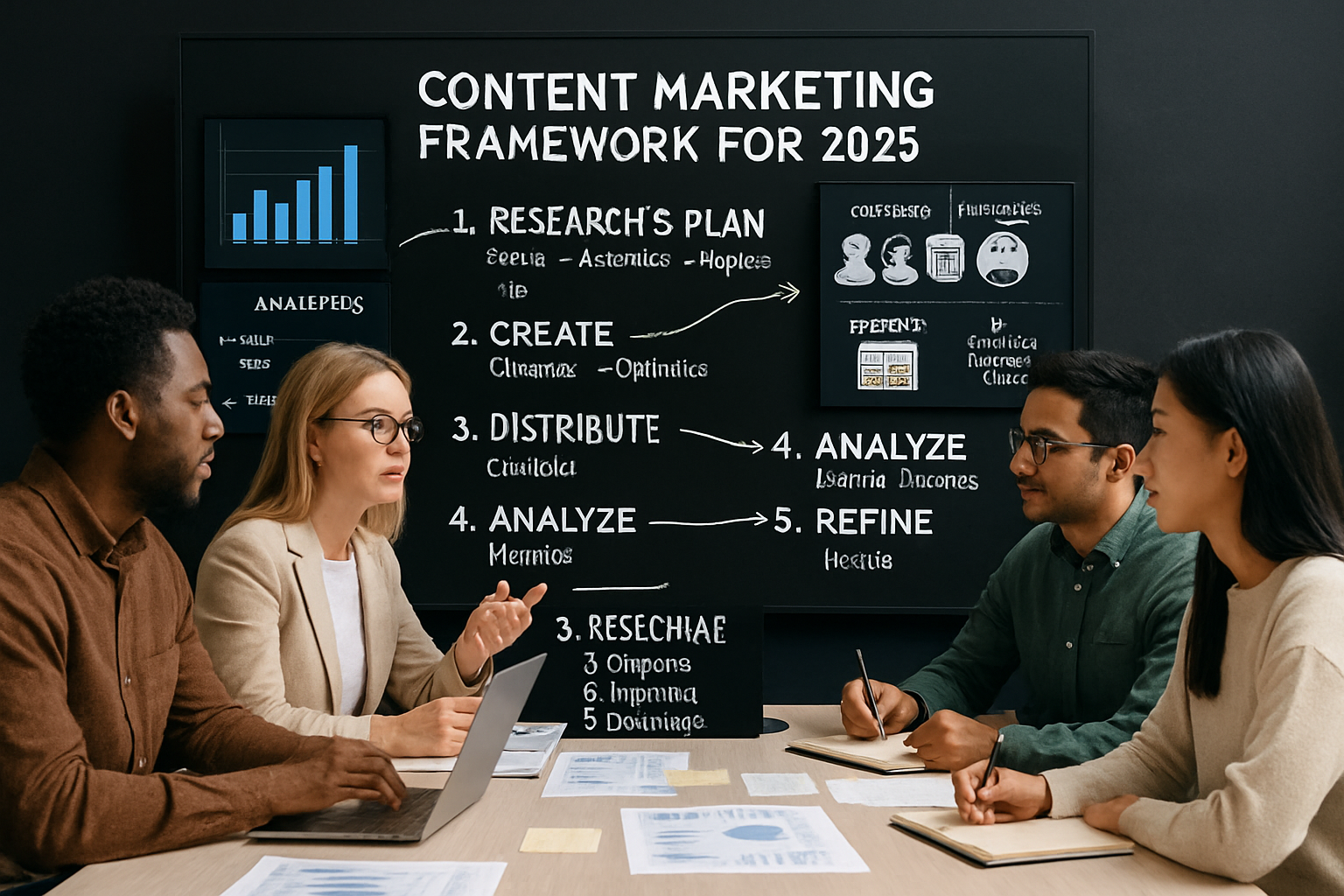
Step-by-Step Content Marketing Framework for 2025
In 2025, content marketers are navigating a rapidly shifting digital landscape. Succeeding now means following a structured, data-driven approach at every stage. Let’s break down the essential steps that empower content marketers to build winning campaigns, foster engagement, and drive measurable results.
Step 1: Audience Research and Persona Development
Every successful strategy begins with knowing your audience. In 2025, content marketers tap into advanced tools to gather insights from surveys, social listening platforms, and CRM data. This information fuels the creation of detailed personas representing real customer behaviors and needs.
- Use SparkToro for audience intelligence.
- Segment data by demographics, interests, and pain points.
- Validate personas through ongoing feedback loops.
By understanding what motivates each persona, content marketers can tailor messages that genuinely resonate. This foundational step ensures your content stands out in an increasingly crowded digital world.
Step 2: Content Planning and Ideation
Planning is where creativity meets strategy. Content marketers rely on editorial calendars to maintain consistency and align with business goals. Brainstorming frameworks like SCAMPER and mind mapping spark fresh ideas while ensuring relevance.
- Schedule monthly ideation sprints for agile teams.
- Use collaborative tools for real-time input.
- Prioritize topics based on audience pain points.
Staying ahead of trends is crucial. For expert perspectives on emerging strategies, check out content marketing trends 2025. This helps content marketers prioritize efforts and stay competitive.
Step 3: Content Creation and Optimization
Quality content bridges the gap between brand and audience. In 2025, content marketers write for both humans and algorithms, leveraging E-E-A-T (Experience, Expertise, Authoritativeness, Trustworthiness) and NLP optimization. Incorporating visuals, clear CTAs, and accessibility features is now standard.
- Optimize for voice search to meet evolving user habits.
- Embed multimedia for richer engagement.
- Ensure all content is mobile-friendly.
By refining each piece, content marketers increase reach and impact, making every article, video, or infographic work harder for the brand.
Step 4: Multi-Channel Distribution
Great content deserves to be seen. Content marketers carefully select the best channels—owned, earned, and paid—to maximize visibility. Repurposing content for different platforms extends its lifespan and reach.
- Share across at least three channels for optimal results.
- Tailor formats to suit each platform (e.g., video for TikTok, articles for LinkedIn).
- Track engagement for each distribution method.
With 87% of marketers distributing on multiple platforms, content marketers must master cross-channel strategies to ensure their content is discovered by the right audience.
Step 5: Promotion and Amplification
Distribution is just the beginning. Content marketers amplify reach by leveraging influencers, strategic partnerships, and employee advocacy. Paid promotion, such as native ads and sponsored posts, can further boost visibility.
- Identify key influencers in your niche.
- Encourage team members to share and advocate.
- Use LinkedIn amplification for B2B content like whitepapers.
These tactics help content marketers break through algorithmic noise and connect with new segments, driving sustained growth.
Step 6: Measurement and Iteration
Data-driven decisions set leading content marketers apart. Setting SMART goals and tracking KPIs such as engagement, conversions, and retention allow for objective evaluation. Regular reviews and A/B testing fuel continuous improvement.
- Set clear benchmarks for each campaign.
- Analyze performance monthly to spot trends.
- Iterate based on real feedback and test results.
By making measurement a core discipline, content marketers ensure every campaign gets smarter and more effective over time.
Step 7: Scaling and Automation
As demand grows, content marketers must scale without sacrificing quality. AI and automation tools streamline workflows, from content ideation to publishing. Content ops platforms help coordinate large teams and maintain brand consistency.
- Automate repetitive tasks to free up creative time.
- Use tools for workflow management and approvals.
- Monitor quality at every stage.
By embracing automation, content marketers can produce more high-impact content, respond quickly to market trends, and support organizational growth.
Cutting-Edge Tools and Technologies for Content Marketers
Staying ahead in 2025 means content marketers must master a dynamic toolkit. The digital landscape evolves fast, and leveraging the right technology can dramatically boost efficiency, creativity, and results.

AI-Powered Content Creation Platforms
AI is transforming how content marketers work. Tools like Jasper and Copy.ai speed up blog writing, automate email personalization, and help scale content production.
AI-powered platforms now generate outlines, suggest headlines, and even optimize tone for target audiences. For a detailed breakdown of leading solutions, explore this comprehensive review of over 70 AI tools in 2025.
Use cases include automating repetitive writing tasks, generating product descriptions, and enhancing creativity with idea prompts. In 2024, 42% of marketers reported using AI for content creation, and the number is rising.
Content Management Systems and Workflows
Efficient content marketers rely on robust CMS platforms like WordPress, Contentful, and HubSpot CMS. These systems streamline content storage, scheduling, and publishing across channels.
Workflow automation is critical for approvals, version control, and consistent branding. Many teams are adopting headless CMS solutions, which enable seamless omnichannel delivery.
A well-integrated CMS helps content marketers collaborate with designers, developers, and editors. Automation frees up time for strategic planning and creative work.
Analytics, SEO, and Research Tools
Data-driven insights are vital for content marketers aiming to outperform competitors. Essential tools include SEMrush, Ahrefs, Google Search Console, and BuzzSumo.
These platforms allow marketers to track rankings, analyze backlinks, identify content gaps, and research trending topics. For instance, Ahrefs Content Explorer uncovers hot topics by analyzing what’s resonating in your industry.
Staying updated with content marketing statistics for 2025 helps marketers benchmark performance and spot emerging trends.
Visual and Video Creation Tools
Visual storytelling is crucial for content marketers in 2025. Canva, Adobe Premiere, Lumen5, and Descript simplify video and graphic creation, even for non-designers.
These platforms offer templates, drag-and-drop editors, and AI enhancements. Content marketers use them to produce short-form videos, infographics, and interactive visuals.
User-generated content tools also empower communities to contribute, increasing authenticity and reach. Quick, high-quality visuals can make or break engagement.
Collaboration and Project Management Solutions
Remote and hybrid teams need robust collaboration tools. Asana, Trello, Notion, and Slack keep content marketers organized and aligned.
These solutions streamline communication, manage content calendars, and automate approvals. Teams using project management tools are 30% more productive, highlighting their importance.
Efficient workflows mean content marketers can handle more projects without sacrificing quality. Strong collaboration fosters innovation and ensures deadlines are met.
Future Trends and Predictions for Content Marketers
The digital landscape is shifting rapidly, and content marketers need to keep their finger on the pulse. As we look to 2025, several trends are set to redefine how content marketers operate, connect with audiences, and drive business impact. Let’s explore the top predictions shaping the future of content marketers.
Hyper-Personalization and AI-Driven Experiences
Hyper-personalization is no longer a buzzword—it’s becoming a necessity for content marketers. Real-time content customization, powered by AI, allows brands to deliver the right message to the right audience at the perfect moment. Predictive analytics and dynamic content delivery systems are helping content marketers anticipate user needs before they even arise.
A prime example is e-commerce brands using AI for personalized product recommendations, boosting engagement and conversions. Innovations like Adobe's AI agents in marketing are setting new standards for AI-driven marketing. As these tools become more accessible, content marketers who embrace them will be better positioned to outperform competitors.
Voice Search and Conversational Content
With the rise of smart devices and voice assistants, content marketers must adapt their strategies for voice search. Optimizing content for conversational keywords and natural language is crucial. FAQs, how-tos, and dialogue-driven formats are becoming more valuable as 55% of households are expected to use smart speakers by 2025 (eMarketer).
Content marketers who understand voice search trends can create content that feels like a real conversation. This means focusing on user intent, answering questions directly, and ensuring content is easily discoverable by voice-enabled devices. Staying ahead in this area is essential for future-ready content marketers.
Sustainability and Ethical Content Marketing
Audiences are demanding more transparency, diversity, and ethical messaging from brands. Content marketers are now expected to champion sustainable content production and prioritize authenticity. This includes adopting green hosting solutions, using inclusive language, and being mindful of the environmental impact of digital campaigns.
Ethical content marketing isn’t just about compliance—it’s about building trust. Content marketers who lead with purpose and integrity can foster deeper connections with their audience. As sustainability becomes a core business value, content marketers will play a critical role in communicating these efforts.
Community-Led and User-Generated Content
The future is social, and community-led strategies are taking center stage. Content marketers are building engaged communities around their brands, encouraging user-generated content (UGC) to boost authenticity and reach. Social media challenges, interactive campaigns, and customer stories are powerful tools for organic growth.
By empowering audiences to co-create, content marketers can spark conversations and drive loyalty. UGC not only amplifies brand messaging, it also offers fresh insights into customer preferences. Community-driven marketing is a win-win for both brands and content marketers.
The Expanding Role of Content Marketers in Business Strategy
Content marketers are stepping up as strategic advisors within organizations. They’re no longer just creators—they’re involved in product development, customer experience, and innovation. As digital marketing budgets increase, content marketers have greater influence on business outcomes.
According to Gartner, 62% of CMOs plan to grow content marketing budgets in 2025. For those looking to stay ahead, resources like the Digital marketing blog insights offer valuable perspectives on industry trends and evolving strategies. The future is bright for content marketers ready to embrace a bigger role in shaping business success.