
Struggling to turn your website visitors into valuable leads? You’re not alone. In 2024, a staggering 61% of marketers report that generating leads is their number one challenge.
This ultimate guide to lead generations will break down the basics for beginners, offering actionable steps and data-driven strategies for 2025. You’ll discover what lead generation is, explore proven tactics, follow a step-by-step process, and learn which tools to use and mistakes to avoid. Ready to transform your marketing approach? Dive in and start building your lead pipeline from scratch.
What is Lead Generation? Understanding the Fundamentals
Turning website visitors into paying customers starts with understanding lead generations. At its core, lead generations refers to the process of attracting and capturing potential customers—called leads—who show interest in your products or services. In digital marketing, this means using online strategies to fill your sales funnel with qualified prospects.
Why is lead generations so crucial for business growth in 2025? The answer is simple: without a steady flow of leads, your sales pipeline dries up. Businesses that master lead generations consistently outperform their competition. There are two main types of leads to know: Marketing Qualified Leads (MQLs) are those who’ve engaged with your marketing efforts but aren’t quite ready to buy, while Sales Qualified Leads (SQLs) have shown clear intent and are primed for a sales conversation.
To move leads from interest to action, you need to understand the buyer’s journey. This journey has three stages:
- Awareness: The lead recognizes a problem or need.
- Consideration: They research solutions, comparing options.
- Decision: They’re ready to choose a provider or product.
Lead generations leverages digital channels at each stage. Social media helps build awareness, while SEO and content marketing guide prospects through consideration. Email campaigns and PPC ads can drive decision-making. Each channel plays a unique role in nurturing leads along their path.
Recent trends show the growing importance of investing in lead generations. In fact, 53% of marketers now allocate at least half their budget to these strategies. For a data-driven look at what’s working in 2025, check out these Lead Generation Statistics 2025. Smart allocation is paying off: marketers using a multichannel approach see higher conversion rates and stronger ROI.
Consider how a SaaS startup built its customer base through targeted lead generations. By focusing on pain points and offering a free trial, they attracted users at the awareness stage. Nurturing these leads with educational content and timely emails moved many toward paid plans—proving the power of a well-orchestrated lead generations strategy.
The landscape of lead generations is rapidly evolving. AI and automation now personalize outreach, score leads, and automate responses—making campaigns more efficient and effective. Personalization is no longer optional; it’s expected. Companies that embrace these innovations are staying ahead in the race for quality leads.
Understanding the fundamentals of lead generations sets the stage for sustainable growth. With the right strategies, tools, and mindset, any business can turn interest into revenue.

Step-by-Step Process: Building Your Lead Generation Strategy
Ready to start building a lead generations engine from scratch? This step-by-step process gives you a proven roadmap. Each stage builds on the last, ensuring your strategy is solid, actionable, and effective for 2025.

Step 1: Define Your Target Audience
Every successful lead generations campaign begins with understanding who you want to reach. Start by researching your audience’s demographics, behaviors, and pain points. Build detailed buyer personas to visualize your ideal customers.
Use tools like Google Analytics and social listening platforms to gather insights. For B2B lead generations, focus on company size, industry, and job roles. For B2C, look at age, interests, and buying habits.
Want expert advice? Check out these Inbound Lead Generation Best Practices to sharpen your audience definition and get started right.
Step 2: Choose the Right Lead Magnet
The right offer turns visitors into leads. In lead generations, a lead magnet is the value you exchange for contact information. Popular options in 2025 include ebooks, webinars, free trials, and templates.
To make your magnet irresistible, solve a specific problem and deliver quick wins. For example, a downloadable checklist that simplifies a complex process can drive high conversion rates.
Test different formats to see what resonates with your audience—what works for B2B may differ from B2C lead generations efforts.
Step 3: Optimize Landing Pages
Your landing page is where magic happens in lead generations. A high-converting page has a clear headline, compelling call-to-action (CTA), and a simple form. Remove distractions and make the benefits obvious.
Run A/B tests on elements like headlines, images, and button colors. This helps you discover what converts best. Remember, average landing page conversion rates hover around 2.35%, so always look for ways to improve.
Effective landing pages are concise, visually appealing, and laser-focused on one goal for maximum lead generations results.
Step 4: Drive Traffic with Multi-Channel Campaigns
To feed your lead generations funnel, drive targeted traffic from multiple sources. Integrate SEO, paid ads, social media, and email to reach prospects wherever they are.
Omnichannel campaigns are powerful. For example, combining social ads with email follow-ups has helped brands increase leads by up to 40%. Use campaign management tools to schedule, track, and optimize across all channels.
Don’t rely on just one source—diversifying your efforts ensures a steady stream into your lead generations pipeline.
Step 5: Capture and Qualify Leads
Once visitors arrive, capture their information efficiently. Use forms, chatbots, and pop-ups to make it easy for them to connect. Lead generations success depends on balancing form length with value.
Implement lead scoring models to prioritize the hottest prospects. Qualification criteria might include job title, company size, or engagement level. Interactive quizzes are a great way to segment and qualify leads while keeping users engaged.
Always review your process to ensure you’re attracting the right people for your lead generations goals.
Step 6: Nurture Leads to Conversion
Not every lead is ready to buy immediately. That’s why nurturing is a must for effective lead generations. Set up email drip campaigns that deliver relevant content at each stage of the buyer’s journey.
Map your content to awareness, consideration, and decision stages. Personalized follow-ups keep your brand top of mind and guide leads toward a decision.
Data shows nurtured leads make purchases that are 47% larger than non-nurtured leads. Keep refining your approach so your lead generations efforts translate into real business growth.
Essential Lead Generation Tactics for 2025
Ready to take your lead generations strategy to the next level? The tactics you use in 2025 will determine how quickly you capture, nurture, and convert your ideal customers. Let’s walk through proven methods that top marketers rely on—so you can build a pipeline that delivers real results.

Content Marketing for Lead Generation
Content marketing remains the backbone of successful lead generations. Creating valuable blog posts, ebooks, and videos helps attract and engage your audience. Gated content—like downloadable guides or templates—encourages visitors to share their contact information in exchange for insights.
For example, one SaaS company published a comprehensive blog post that generated over 1,000 leads in just three months. To maximize results, optimize every piece of content for SEO and include strong calls to action. Use pillar pages to guide readers through the buyer journey, ensuring each touchpoint moves them closer to conversion.
Social Media Lead Generation
Social media is a powerhouse for lead generations, with platforms like LinkedIn, Facebook, Instagram, and TikTok offering both paid and organic opportunities. LinkedIn’s lead gen forms, for instance, have boosted B2B lead volumes by up to 30%.
To succeed, combine engaging posts, targeted ads, and interactive content—like polls or live Q&As. Use social listening tools to discover trending topics and respond to audience needs in real time. Don’t forget to analyze performance data regularly to refine your campaigns for better results.
Email Marketing Strategies
Email remains one of the highest-ROI channels for lead generations, returning $42 for every $1 spent. Start with list building and segment your audience for highly personalized outreach. Automation tools let you deliver timely drip campaigns and re-engage inactive subscribers.
Personalized subject lines and dynamic content boost open and click rates. Use A/B testing to refine your messaging and timing. By nurturing leads with relevant, value-packed emails, you’ll keep your brand top-of-mind and increase the likelihood of conversion.
Paid Advertising and Retargeting
Paid ads are essential for scaling lead generations. Platforms like Google Ads and Facebook Ads offer precision targeting to reach high-intent prospects. Retargeting is especially effective—studies show retargeted visitors convert 70% more often than cold traffic.
Set clear budgets and track ROI closely. Use compelling visuals, concise copy, and irresistible offers to boost click-through rates. Regularly test different ad creatives and audiences to uncover what drives the best results for your business.
SEO and Inbound Marketing
SEO is a cornerstone of sustainable lead generations. Optimize your website with intent-based keywords and create lead-generating pillar pages that answer your audience’s top questions. Inbound marketing draws prospects in by providing value at every stage of the buyer journey.
Inbound campaigns have been shown to drive 54% more leads than outbound efforts. For more actionable SEO strategies, explore Essential SEO strategies. Consistently update and repurpose content to maintain rankings and relevance.
Leveraging AI and Automation
AI and automation are transforming lead generations in 2025. AI chatbots handle initial inquiries instantly, while predictive lead scoring helps prioritize hot prospects. Automated workflows ensure timely follow-ups and personalized nurturing sequences.
Tools like Drift and HubSpot enable seamless integration of AI into your marketing stack. Automation doesn’t just save time—it also reduces lead response time by up to 80%. Embrace these technologies to streamline your process and focus on what matters most: converting leads into loyal customers.
Tools and Platforms for Effective Lead Generation
Choosing the right tools can make or break your lead generations strategy. With so many options available, it’s crucial to select platforms that streamline your process, capture data efficiently, and help you nurture leads from the first touchpoint to conversion.
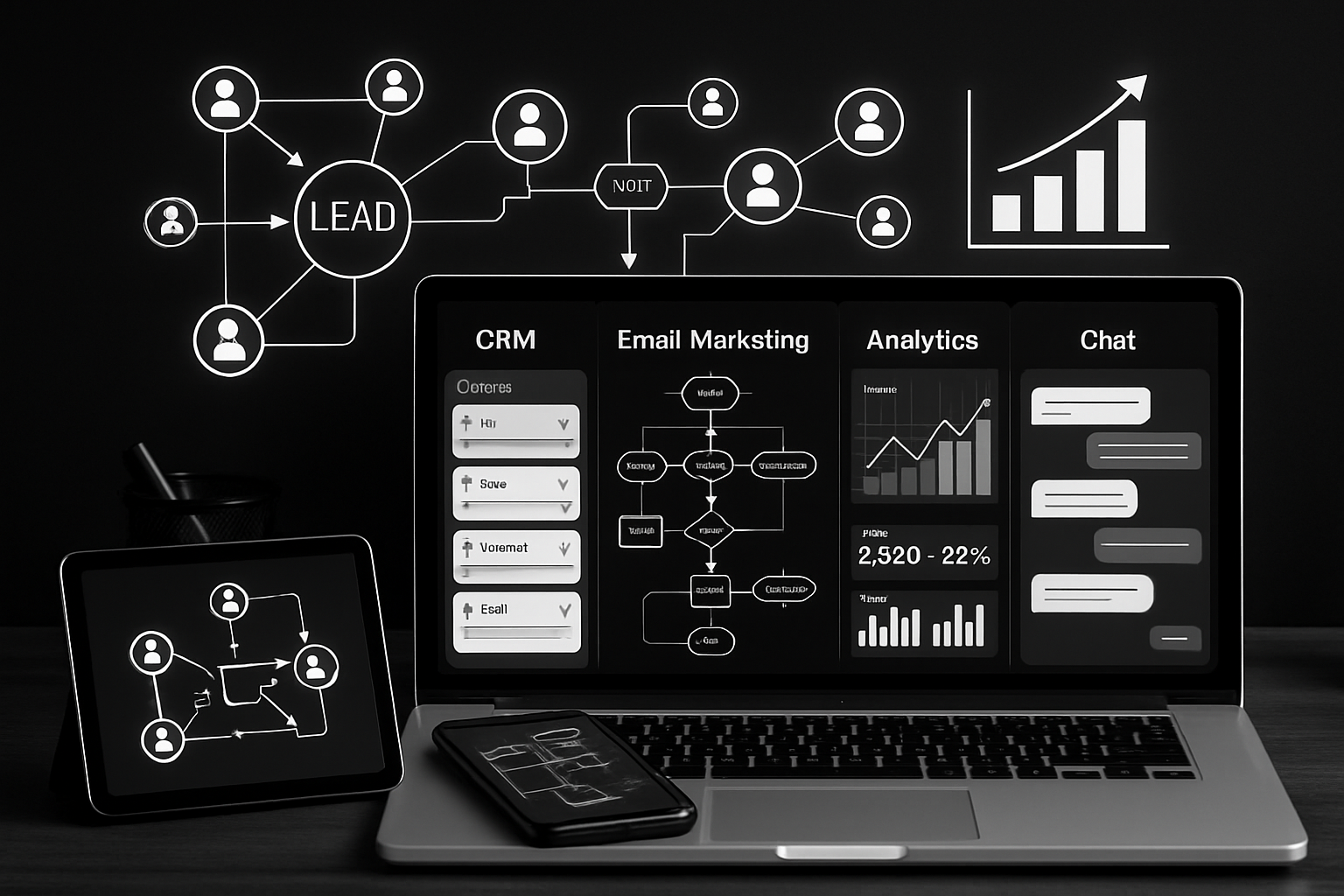
CRM Systems:
A robust CRM is the backbone of effective lead generations. Platforms like HubSpot, Salesforce, and Zoho help you organize contacts, track interactions, and automate follow-ups. These tools centralize your sales and marketing data, making it easier to qualify and prioritize leads. For beginners, look for CRMs with intuitive interfaces and strong support resources.
Email Marketing Tools:
Email remains a cornerstone of lead generations. Tools such as Mailchimp and ActiveCampaign enable you to create personalized campaigns, segment your audience, and automate nurturing sequences. These platforms also provide analytics to track open rates and conversions, so you can refine your approach as your list grows.
Landing Page Builders:
Your landing pages are the gateway to converting visitors into leads. Unbounce and Leadpages offer drag-and-drop builders, A/B testing, and integration with your CRM and email tools. They help you design high-converting pages quickly, even if you don't have a coding background.
Chatbots and Live Chat:
Real-time engagement boosts lead generations by meeting visitors where they are. Drift and Intercom let you add automated chatbots and live chat to your website. These tools can answer questions instantly, qualify leads, and even book meetings, reducing friction in the buyer’s journey.
Analytics and Tracking:
To optimize lead generations, you need clear data. Google Analytics and Hotjar allow you to monitor visitor behavior and track conversion events. For deeper insights on business intelligence and analytics, check out Business intelligence and analytics. These tools help you spot bottlenecks and identify which channels are most effective.
Integrations and Workflow Automation:
Seamless integration between your tools ensures data flows without manual effort. Most platforms connect via APIs or third-party services like Zapier, enabling workflows that sync contacts, trigger emails, or update lead statuses automatically.
Example: Doubling Conversion Rates Through Integration
One company integrated their CRM with their email marketing platform and saw their lead generations conversion rate double. Automated handoffs and unified data allowed for faster, more personalized follow-ups, proving the value of an interconnected stack.
Key Selection Criteria:
When choosing tools for lead generations, prioritize:
- Scalability to support growth
- Ease of use for your team
- Reliable customer support and documentation
A quick comparison table:
| Tool Type | Top Options | Best For |
|---|---|---|
| CRM | HubSpot, Salesforce, Zoho | Contact management, automation |
| Email Marketing | Mailchimp, ActiveCampaign | Campaigns, segmentation |
| Landing Pages | Unbounce, Leadpages | Conversion design, A/B tests |
| Chat/Chatbots | Drift, Intercom | Real-time engagement |
| Analytics | Google Analytics, Hotjar | Visitor insights, tracking |
Selecting the right combination of tools is essential to building a scalable, effective lead generations engine. Start small, integrate as you grow, and always track your results.
Measuring and Optimizing Your Lead Generation Efforts
Turning traffic into leads is just the start—measuring and optimizing your lead generations process is what sets successful marketers apart. Without solid data, you’re flying blind. To build a high-performing funnel, you need to track, test, and refine every stage. Let’s break down how to measure what matters and make every lead count.
Key Metrics and Tracking
Start by focusing on the metrics that shape your lead generations strategy:
- Conversion Rate: What percentage of visitors become leads?
- Cost per Lead (CPL): How much are you spending to acquire each lead?
- Lead Quality: Are your leads actually turning into customers?
- Return on Investment (ROI): Are your efforts paying off?
Set up tracking with UTM parameters on all your campaigns. This lets you pinpoint which sources and channels drive the most effective lead generations. Use analytics dashboards, like Google Analytics or Hotjar, to visualize performance trends.
Track each channel’s impact individually. For example, compare SEO, paid ads, and social media side by side. For a deeper dive into benchmarks, check out Lead Generation Benchmarks by Channel to see how your results stack up against industry averages.
A/B Testing and Attribution Models
Continuous improvement in lead generations depends on experimentation. A/B testing helps you discover what really works. Try running split tests on:
- Landing page headlines and images
- Call-to-action (CTA) button text and color
- Form length and required fields
- Email subject lines and content offers
Analyze test results using clear metrics. Even a minor tweak can boost conversions significantly. Attribution models are also key—understand how each touchpoint influences the final conversion. Choose from:
- First-touch: Credits the first interaction.
- Last-touch: Credits the final step before conversion.
- Multi-touch: Distributes credit across the journey.
By mapping customer interactions, you’ll see which channels and messages drive the best lead generations outcomes.
Data-Driven Optimization and Continuous Improvement
Once you’re tracking and testing, focus on optimizing your lead generations over time. Build a cycle of review and refinement:
- Analyze results weekly or monthly.
- Identify what’s working and what’s not.
- Adjust campaigns and landing pages based on data.
- Rinse and repeat.
Consider this example: a SaaS company used data-driven optimization and improved lead quality by 25% in just three months. They reviewed analytics, cut underperforming ads, and doubled down on top-performing content.
Avoid common pitfalls—don’t ignore your data, over-automate responses, or forget to nurture leads. Instead, commit to iterative testing and learning. For more expert advice, explore Lead Generation Best Practices 2025 to keep your tactics sharp and future-proof.
Remember, industry benchmarks for lead generations can shift quickly. Regularly compare your performance to stay ahead, and don’t be afraid to experiment with new tools or approaches.
Common Lead Generation Mistakes Beginners Make (And How to Avoid Them)
Even savvy marketers can fall into common traps when starting out with lead generations. Knowing what to avoid is just as important as knowing what to do. Let’s break down the most frequent mistakes and how you can sidestep them for better results.
-
Not Defining Your Target Audience Clearly
One of the biggest mistakes in lead generations is skipping audience research. Without a clear profile of your ideal customer, your campaigns will miss the mark. Take time to build detailed personas using data from tools like Google Analytics or social listening. This ensures your messaging speaks directly to those most likely to convert. -
Using Weak or Irrelevant Lead Magnets
If your lead magnet doesn’t solve a real problem or offer genuine value, visitors won’t bother giving their information. In lead generations, quality trumps quantity. Make sure your offer is specific, actionable, and aligned with what your audience wants. For inspiration, check out Digital marketing blog insights for proven strategies and examples. -
Neglecting Mobile Optimization
Over half of all web traffic is mobile, yet many beginners overlook mobile-friendly design. If your lead generations forms or landing pages don’t load quickly or display well on phones, you’re losing leads. Test your pages on multiple devices and use responsive templates to ensure a seamless experience. -
Overcomplicating Forms or Landing Pages
Long forms, confusing layouts, or too many fields can scare off potential leads. Keep your lead generations forms simple—ask only for essential information. Use clear headlines, concise copy, and a single call to action. A/B test different elements to find what works best. -
Failing to Nurture Leads After Capture
Capturing a lead is just the start. Many marketers forget to follow up, leaving leads to go cold. Set up automated email sequences and personalized content to keep prospects engaged. Remember, nurturing is crucial in the lead generations process for turning interest into sales. -
Ignoring Analytics and ROI Measurement
If you’re not tracking results, you can’t improve. Beginners often skip measuring conversion rates, cost per lead, or campaign ROI. Use analytics tools to monitor performance and adjust strategies accordingly. For more tips on how to track and improve your campaigns, browse the Digital marketing blog insights. -
Relying Solely on One Channel
Putting all your eggs in one basket is risky. Effective lead generations use a mix of channels—SEO, social media, email, and paid ads. Diversifying helps reach a broader audience and cushions you if one channel underperforms. For social-specific tactics, you might find Social media lead generation tips helpful. -
Example: A Real-World Failed Campaign
Imagine a startup that launched a lead generations campaign using only Facebook ads and a generic ebook. They didn’t define their audience, their landing page was cluttered, and follow-up was non-existent. Unsurprisingly, conversions were low, and most leads went cold. The lesson? Success requires clear targeting, channel diversity, strong offers, and consistent nurturing.
Learning from these mistakes can save you time, money, and frustration. Focus on audience, value, simplicity, measurement, and multi-channel strategies to build more effective lead generations campaigns.