
In 2025, conversations about digital privacy are louder than ever, with personalized ads sparking heated debates. If you’re wondering how your data is used online, you’re not alone. This guide to the digital advertising alliance breaks down what it means for both consumers and marketers. We’ll explore the DAA’s mission, its evolving programs, new 2025 updates, privacy challenges, opt-out tools, and the debates shaping tomorrow’s online experience. Ready to take control of your digital footprint? Get the clarity and confidence you need to make smart, informed choices in the fast-changing world of online advertising.
What Is the Digital Advertising Alliance?
In today’s online world, the digital advertising alliance is a name you’ll hear often when conversations turn to privacy and targeted ads. But what exactly is it, and why does it matter for both consumers and marketers? Let’s break down its origins, principles, and pivotal role in shaping how ads reach us in 2025.

Origins and Mission of the DAA
The digital advertising alliance was born from a need to address growing public concerns about online privacy and data use. Established as a coalition of industry leaders—including Google, Facebook, Amazon, AT&T, and Netflix—the alliance aimed to set unified standards for responsible digital advertising.
Its mission is to strike a balance between delivering personalized ads and upholding consumer privacy. The DAA emerged in response to rising regulatory threats and mounting pressure from privacy advocates. A key example of its work is the “YourAdChoices” program, which gives users more insight and control over the ads they see.
Americans have shown they value access to free, ad-supported content, with a 2020 SurveyMonkey study estimating this value at $1,400 per year. The digital advertising alliance often cites this figure to defend its practices against accusations of “surveillance capitalism,” arguing that responsible data use underpins the free internet.
Core Principles and Standards
The foundation of the digital advertising alliance rests on its self-regulatory principles for web and mobile advertising. These standards emphasize three pillars: transparency, consumer control, and corporate accountability. For instance, participating companies must clearly disclose their data practices and offer straightforward tools for opting out of interest-based advertising.
The DAA distinguishes between “relevant advertising” (using general context) and “interest-based advertising” (using user data and behavior). Companies that join the alliance must meet strict compliance requirements and undergo periodic reviews.
Importantly, DAA principles are designed to work alongside global privacy laws like the GDPR and CCPA. Enforcement actions—such as compliance checks and public reports—help keep members accountable. For 2025, the alliance is reviewing its standards to address the rise of AI-driven ad systems, as detailed in the DAA’s AI Privacy Guidance Review.
DAA’s Role in the Digital Advertising Ecosystem
The digital advertising alliance positions itself as both a privacy advocate and an industry safeguard. Its influence spans websites, mobile apps, and connected devices, shaping how ads are delivered and how user data is handled. By collaborating with advertisers, publishers, and technology platforms, the alliance sets common rules that can improve consumer trust and deliver better results for brands.
For consumers, the DAA’s initiatives mean more transparency and tools to control personal data. For marketers, following DAA standards can boost return on investment and reduce regulatory risk. Yet, critics argue the digital advertising alliance sometimes acts more as an industry shield than a true privacy watchdog. Concerns remain about the effectiveness of self-regulation and whether the alliance’s efforts go far enough to protect users.
DAA Programs and Tools Explained
Understanding the programs and tools offered by the digital advertising alliance is crucial for anyone navigating digital privacy in 2025. The DAA has built a suite of resources designed to help consumers manage how their data is used for advertising, while also aiming to maintain the value exchange that supports free online content.
The “YourAdChoices” Program
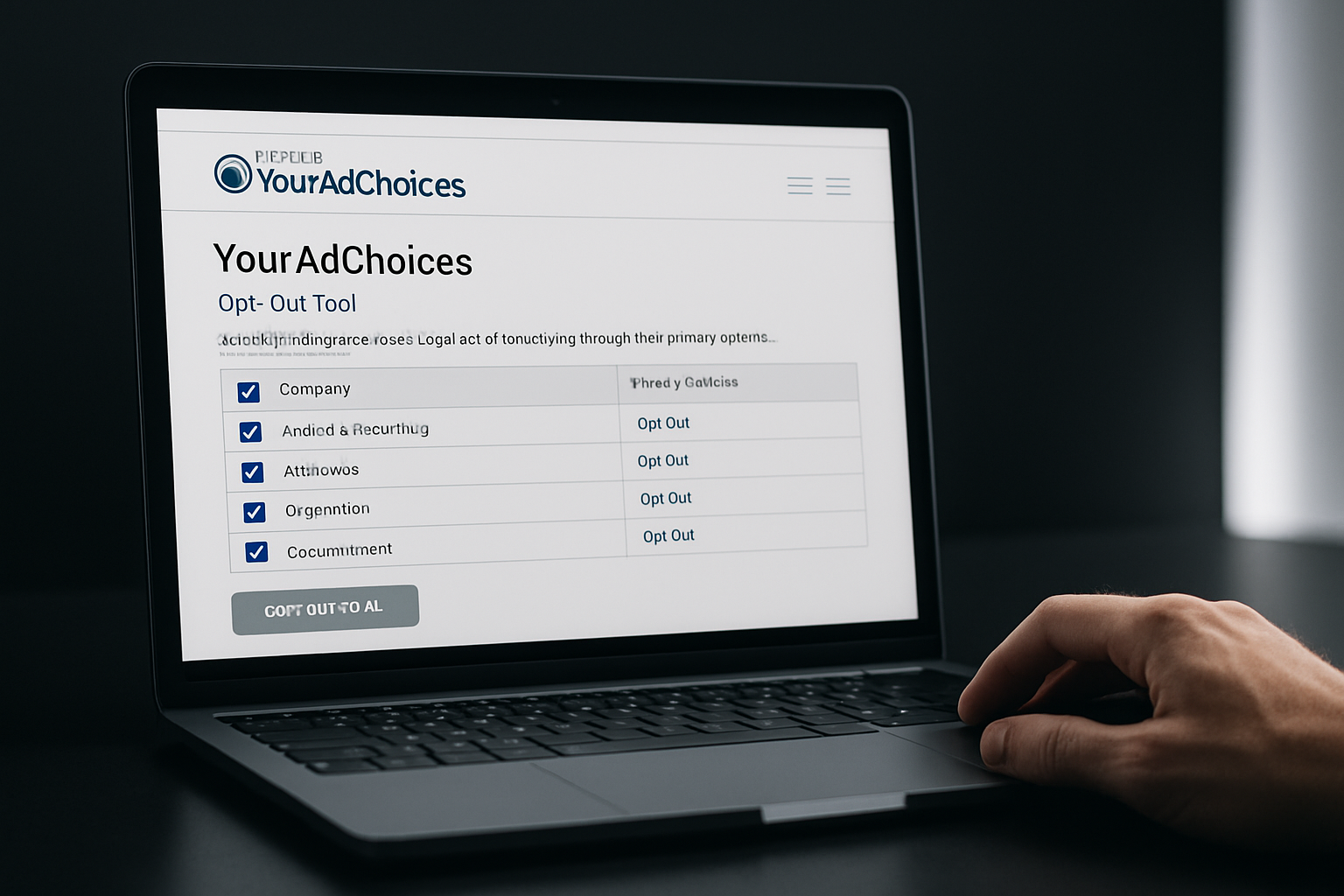
The “YourAdChoices” program is the centerpiece of the digital advertising alliance’s push for consumer control. Its main purpose is to let users opt out of interest-based advertising from participating companies. When you visit the DAA’s WebChoices tool, it scans your browser to identify which companies are tailoring ads to you.
Using WebChoices is straightforward: after the scan, you see a list of companies and can choose to opt out of targeted advertising from each. The tool works by placing persistent cookies in your browser to remember your preferences. This approach, while effective for many, is limited to companies that are part of the digital advertising alliance.
It’s important to note that opting out via YourAdChoices doesn’t stop all ads—it just removes personalization from those that follow DAA standards. Not every ad network is included, so some tracking may persist. Another limitation is that the opt-out only applies to the specific browser and device you use, making it necessary to repeat the process across your devices.
The digital advertising alliance has positioned YourAdChoices as a practical balance between privacy and the business model of free online content. However, understanding its boundaries helps consumers set realistic expectations about their online privacy.
AdChoices Icon and Consumer Awareness
You’ve probably noticed the small blue triangle icon—this is the AdChoices symbol. When you see it on an ad, it means that the advertiser is following the digital advertising alliance’s self-regulatory principles. Clicking the icon reveals more about why the ad was shown and provides links to opt out or get more information.
Transparency is a core value here. The digital advertising alliance requires participating companies to display the icon and provide accessible information about data collection and targeting. Educational resources, such as tutorials and FAQs, are widely available to help users understand their rights.
A standout example is Weather.com, which integrates DAA tools and a clear “Do Not Sell or Share My Personal Information” link for California residents. This not only aids compliance with state laws but also boosts consumer trust. The alliance also invests in outreach, partnering with publishers and tech platforms to increase awareness.
Despite these efforts, many users remain unaware of what the icon represents or how to use it. The digital advertising alliance continues to evolve its consumer education campaigns, aiming to make privacy choices more intuitive and visible in 2025.
Opt-Out Mechanisms and Their Effectiveness
Opting out using digital advertising alliance tools is meant to be simple, but the reality can be more complex. Here’s a quick step-by-step guide:
- Visit the DAA’s WebChoices site.
- Allow the tool to scan your browser for participating advertisers.
- Select the companies you wish to opt out from.
- Confirm your choices and ensure cookies are enabled.
However, several technical barriers can frustrate users. Browser compatibility issues, the need for cookies, and device-specific settings mean that opting out isn’t always seamless. If you clear your cookies, you’ll need to repeat the opt-out process, which many find inconvenient.
Critics argue that this system, while well-intentioned, can make privacy control feel like a moving target. Persistent cookies are required to remember your choices, sparking debates about whether true privacy is possible within this framework. User feedback on forums like Reddit highlights frequent technical issues and confusion, with some successful experiences but many reports of opt-out failures.
For a deeper dive into these challenges, the study on opt-out mechanisms’ effectiveness provides valuable insights into why these systems often fall short of user expectations. As the digital advertising alliance continues to refine its tools, ongoing transparency and technical improvements will be key to building consumer trust.
Key Updates for 2025: Policy, Technology, and Compliance
The digital advertising alliance is facing its most pivotal year yet. As 2025 unfolds, new laws, tech shifts, and industry debates are reshaping how privacy and advertising intersect. Here’s what’s changing—and what it means for everyone in the digital ecosystem.

Evolving Privacy Laws and Regulatory Landscape
2025 brings a new wave of privacy laws that directly impact the digital advertising alliance and its member companies. The CCPA and its amendment, the CPRA, continue to set the tone in the U.S., with the California Privacy Protection Agency ramping up enforcement and issuing more fines for non-compliance. Meanwhile, Europe’s GDPR remains a global benchmark, and other regions are introducing similar rules.
The digital advertising alliance is under pressure to adapt its standards to these complex, overlapping regulations. For example, companies must now offer clearer disclosures and more robust opt-out mechanisms to meet legal requirements. Industry lobbying is also intensifying as brands attempt to shape how far regulators can go in restricting data use.
For an in-depth look at how these changes are affecting advertising and privacy, check out DAAP’s 2024 Consumer Privacy Insights. As regulations evolve, the digital advertising alliance is updating its compliance playbook to keep pace.
Advances in Ad Tech and Consumer Tracking
Technology is changing fast, and the digital advertising alliance is racing to respond. With Google Chrome phasing out third-party cookies, the industry is pivoting to cookieless tracking and alternative identifiers. These new solutions, like device fingerprinting and contextual targeting, pose fresh privacy challenges.
AI-driven ad targeting is another game-changer. Marketers now use machine learning to predict user interests across devices. However, this makes traditional opt-out tools less effective, since tracking no longer relies solely on cookies. The digital advertising alliance is working to update its tools, but consumer control remains a hot topic.
Debates are heating up around “Pay or Surveillance Ads”—should users pay for privacy, or accept targeted ads for free content? The answer isn’t simple, and the digital advertising alliance is at the center of this ongoing conversation.
Updated DAA Principles and Best Practices
To keep up with 2025’s regulatory and tech shifts, the digital advertising alliance has rolled out new and revised principles. Enhanced transparency is now required—companies must clearly explain what data they collect and why. Consent requirements are stricter, with more explicit opt-in and opt-out options.
Accountability is also in the spotlight. The digital advertising alliance has introduced more frequent compliance reviews and tougher enforcement for violations. For example, companies failing to honor opt-out requests can face public censure or removal from DAA programs.
Feedback from the industry is mixed. Some advertisers appreciate the clarity and structure, while others find the new standards burdensome. Still, these changes aim to restore consumer trust and ensure responsible data use in the digital age.
Industry Self-Regulation vs. Government Intervention
The debate between self-regulation and government oversight is more intense than ever. Supporters of the digital advertising alliance argue that industry-led standards offer flexibility, encourage innovation, and can adapt quickly to new tech trends. They often cite the DAA’s 2020 survey showing the value Americans place on free, ad-supported content.
Critics, however, point to conflicts of interest and claim that self-regulation falls short of protecting consumer rights. Regulatory agencies in 2025 have issued stronger statements, warning that voluntary standards may not be enough. As privacy laws tighten, the future may involve a hybrid approach—combining government rules with digital advertising alliance best practices.
For now, the digital advertising alliance remains a key player in shaping how privacy and advertising coexist.
Navigating Privacy and Consumer Rights
Digital privacy is front and center in 2025, and the digital advertising alliance is a key player in shaping the landscape of consumer rights. As regulations evolve and technology advances, understanding your options for protecting your data is more important than ever.
Understanding “Do Not Sell or Share My Personal Information”
The phrase “Do Not Sell or Share My Personal Information” has become a staple of online privacy, especially after California’s CCPA and CPRA laws. These regulations require companies to provide consumers with a clear opt-out from having their data sold or shared. The digital advertising alliance helps publishers and advertisers comply by offering integrated tools that make it easier to honor these requests.
For instance, Weather.com uses DAA-provided options to let users opt out of data sales, visibly aligning with legal mandates. However, the effectiveness of these tools depends on whether companies participate in the digital advertising alliance. If a business isn’t a member, your opt-out choice might not be honored everywhere your data travels.
Reddit communities often debate the real-world impact of these opt-outs. Many users express skepticism, noting that while DAA tools offer some control, they don’t cover all data brokers or ad networks. For those seeking true privacy, this limitation is a significant concern.
Opt-Out Limitations and Workarounds
Opting out of targeted ads isn’t always as simple as clicking a button. The digital advertising alliance’s tools, like WebChoices, rely on browser cookies to remember your preferences. If you clear your cookies or switch devices, your opt-out may disappear, forcing you to repeat the process.
Technical barriers also exist. Some browsers or privacy settings may block the cookies needed for opt-outs to work, and not all devices are supported. This can be frustrating for consumers who expect a universal solution from the digital advertising alliance.
To overcome these hurdles, privacy-conscious users often turn to browser extensions, tracker blockers, or privacy-focused browsers. Using a VPN can add another layer of data protection. On Reddit, users share tips on how to combine these tools for stronger privacy, acknowledging that no method is foolproof but layering defenses helps.
Consumer Awareness and Education
The digital advertising alliance invests in educating the public about privacy and opt-out tools. Tutorials, FAQs, and outreach programs are designed to clarify your rights and how to use DAA resources. For example, community-driven guides and “You Should Know” posts on Reddit have helped boost awareness, with resources like YourOnlineChoices.com earning over 19,000 upvotes.
Despite these efforts, many consumers still find the process confusing. The complexity of privacy choices, technical jargon, and the sheer number of steps required can lead to user fatigue. Ongoing discussions on the Digital marketing blog highlight the need for clearer, more accessible guidance as the ecosystem evolves.
Ultimately, while the digital advertising alliance provides valuable tools, staying informed and proactive remains the best way to protect your privacy rights in 2025.
Debates and Controversies: Is the DAA a True Privacy Ally?
Industry Perspectives and Public Criticism
The digital advertising alliance sits at the heart of a heated debate. Industry leaders argue it’s the cornerstone of a free, ad-supported internet. They point to the value consumers receive—access to news, entertainment, and apps without paywalls. Marketers highlight how the digital advertising alliance gives users control over their data through opt-out tools and transparent disclosures.
On the flip side, critics accuse the digital advertising alliance of merely shielding the industry from tougher regulation. They claim opt-out mechanisms are confusing, and real consumer control is limited. The phrase “surveillance capitalism” pops up in privacy forums, with users questioning who really benefits from DAA programs. As one Redditor put it: “Personalized ads is a con game. Follow the money: Google, Facebook.”
Transparency is another sticking point. Who profits most from these self-regulatory efforts? Some argue that true privacy protection requires independent oversight, not just industry promises. For more on the intersection of data, social platforms, and personal privacy, see this overview of social networking and privacy.
Effectiveness of DAA Programs
When it comes to real-world impact, the digital advertising alliance has both wins and misses. On the plus side, DAA programs have standardized privacy disclosures and made the AdChoices icon a familiar sight. More consumers are aware that they can opt out of interest-based ads, and some appreciate the transparency.
However, the limitations are hard to ignore. DAA opt-outs don’t cover all ad networks, and technical barriers—like browser compatibility or cookie requirements—often frustrate users. Community feedback on privacy forums highlights ongoing issues: opt-outs that don’t “stick,” persistent tracking, and the need to re-opt-in after clearing cookies.
Here’s a quick comparison:
| Successes | Shortcomings |
|---|---|
| Standardized disclosures | Limited coverage of ad networks |
| Increased user awareness | Technical barriers to opt-out |
| Industry-wide adoption | Lack of strict enforcement |
Despite these problems, the digital advertising alliance continues to evolve its tools. Yet, many consumers remain skeptical, questioning whether these measures are enough or simply window dressing.
The Future of Self-Regulation and Consumer Trust
Looking ahead, the future of the digital advertising alliance is far from certain. With global privacy laws tightening, will industry self-regulation survive, or will government intervention become the norm? Some experts foresee hybrid models, where regulatory agencies set the rules and alliances like the DAA handle day-to-day compliance.
Consumer trust is another wildcard. In 2025, some users are disengaged, while others demand stronger protections and greater transparency. Public advocacy groups and watchdogs are calling for more robust oversight. The debate is also shaped by evolving ad tech and shifting consumer expectations, as explored in IAB Europe’s Advertising Horizons 2025.
Ultimately, the digital advertising alliance must prove it can adapt to new standards and restore faith in digital privacy. The coming years will reveal whether self-regulation can earn lasting trust or if a new approach is necessary.
How to Protect Your Privacy in the DAA Era: Practical Steps for 2025
Navigating the digital advertising alliance landscape can feel overwhelming, especially as privacy policies evolve. To help you safeguard your data and make smart choices in 2025, here’s a step-by-step guide tailored for both digital newcomers and seasoned users. Each action below empowers you to take greater control of your online presence and understand the trade-offs you face.
Step 1: Identify Participating Companies and Trackers
Start by discovering which companies are tracking your online activity. Tools from the digital advertising alliance, like WebChoices and YourAdChoices, reveal networks collecting your data. For a broader view, platforms such as Aboutads.info or YourOnlineChoices.com help you see the bigger picture. Regional approaches to privacy, such as those discussed in Digital advertising in Madrid, show how local markets interpret DAA standards.
Step 2: Complete the Opt-Out Process
Once you know who’s tracking you, use the digital advertising alliance’s opt-out tools. Visit their site, select the companies you want to opt out from, and confirm your choices. Be sure your browser accepts cookies, as these are required to remember your preferences. Double-check your settings after opting out to ensure the changes take effect, and repeat the process on each device you use.
Step 3: Supplement with Additional Privacy Tools
DAA opt-outs are a good start, but extra measures boost your privacy. Try privacy-focused browsers, tracker-blocking extensions, or VPNs to mask your activity. Community recommendations on Reddit often highlight effective combinations. Remember, not all trackers fall under the digital advertising alliance’s umbrella, so layering your protections is key to minimizing unwanted data collection.
Step 4: Stay Informed on Privacy Rights and Policy Changes
Privacy rules and digital advertising alliance standards shift rapidly. Keep up by following DAA announcements, regulatory updates, and privacy advocacy groups. For example, local changes in digital marketing laws—like those discussed for Digital advertising in Madrid—can impact how your data is handled. Staying informed helps you react quickly to new threats or opportunities.
Step 5: Advocate for Stronger Privacy Protections
Your voice matters. Participate in public forums, comment on proposed regulations, or support privacy-focused organizations. The digital advertising alliance often updates its programs in response to consumer feedback and policy shifts. By advocating for transparency and robust protections, you help shape the future of online privacy for everyone.
Step 6: Educate Yourself and Others
Knowledge is power. Read up on privacy tools, follow tutorials, and join communities like Reddit’s privacy forums. Share what you learn with friends and family. The digital advertising alliance offers educational resources, but firsthand experiences and peer advice often make complex topics easier to grasp. The more informed you are, the better your decisions.
Step 7: Evaluate the Value Exchange
Finally, weigh the benefits of free online content against the personal data you share. The digital advertising alliance facilitates this trade-off by promoting transparency. Decide what you’re comfortable with—some users accept personalized ads for convenience, while others prioritize maximum privacy. Make choices that fit your values and revisit them as the landscape evolves.
Digital marketing agency in Dubai | Agencia de marketing digital en Gijón