
The world of online marketing and advertising is changing at lightning speed as we head into 2025. Brands and marketers face new opportunities, challenges, and rules almost every month. Staying ahead requires more than just creativity—it demands up-to-date strategies and a clear understanding of compliance essentials.
This guide delivers everything you need to succeed in online marketing and advertising, from the latest trends and regulatory updates to platform innovations and data-driven tactics. You’ll discover practical steps and proven best practices to maximize your ROI in a fast-evolving digital landscape.
Ready to future-proof your approach? Dive in for insights that will help you attract, engage, and convert in 2025 and beyond.
The Digital Advertising Landscape in 2025
The world of online marketing and advertising is undergoing rapid transformation as we move into 2025. Marketers are facing new opportunities, evolving platforms, and shifting consumer expectations. Let’s break down the trends and challenges shaping the digital landscape this year.

Key Trends Shaping Online Marketing
Digital ad spend is surging worldwide, with projections showing it will easily surpass $700B in 2025. Brands are shifting from traditional to digital-first strategies, focusing heavily on mobile and video content. Programmatic and AI-driven ad buying are expanding, making campaigns more efficient and targeted. Privacy concerns are driving the move toward first-party data collection, impacting how brands connect with audiences. For a comprehensive overview of these shifts, see the latest digital advertising trends 2025. Staying ahead in online marketing and advertising means adapting quickly as these trends accelerate.
Major Platforms and Channels
Google, Meta, Amazon, and TikTok remain dominant, while emerging platforms are gaining ground. Retail media networks are booming, offering new ways for brands to reach shoppers at the point of purchase. Connected TV (CTV) and streaming ads continue their rapid growth, capturing audiences who have cut the cord. Social commerce is being integrated with advertising, allowing users to shop directly from their feeds. For anyone in online marketing and advertising, understanding where your audience spends time is crucial for maximizing reach and ROI.
Consumer Behavior and Expectations
Today’s consumers expect personalized, relevant experiences from online marketing and advertising. They are wary of intrusive or deceptive ads and place high value on authenticity and real customer reviews. People now engage with brands across multiple devices and channels, often researching on one and purchasing on another. Did you know 85% of consumers trust online reviews as much as recommendations from friends? This shift means brands must prioritize transparency and build trust at every touchpoint.
Challenges and Opportunities
Ad fatigue and banner blindness are real hurdles, with users tuning out repetitive or irrelevant messages. Privacy restrictions and the rise of ad blockers make it harder to reach some audiences. However, there are exciting opportunities in influencer and native advertising, as well as in interactive ad formats like AR and VR. Brands embracing innovation in online marketing and advertising—such as immersive campaigns—are seeing higher engagement and loyalty. Staying agile in the face of these challenges is key to long-term success.
Essential Compliance and Regulatory Updates for 2025
Navigating the fast-changing world of online marketing and advertising in 2025 requires a sharp focus on compliance. New laws, evolving guidelines, and growing consumer expectations mean that staying up to date is no longer optional—it's mission-critical. Let's break down the key regulatory updates every marketer should know.

New and Updated Regulations
Regulatory shifts are changing the landscape of online marketing and advertising. The INFORM Consumers Act now requires stricter identity verification for high-volume third-party sellers on online marketplaces. The FTC’s Rule on Unfair or Deceptive Fees, effective May 2025, cracks down on hidden costs, demanding transparency in pricing.
Updates to the CAN-SPAM Act enforcement mean email marketers must be more vigilant than ever. These changes impact everyone from e-commerce sellers to agencies managing campaigns at scale. For those in online marketing and advertising, staying compliant ensures you avoid costly penalties and maintain consumer trust.
Truth-in-Advertising and Disclosure Requirements
Transparency is at the heart of trustworthy online marketing and advertising. The FTC’s .com Disclosures guidelines require all material connections between brands and influencers or affiliates to be clearly stated. Terms and conditions must be presented in a way that's both clear and conspicuous.
Recent FTC actions against misleading native ads have set new precedents. Marketers should routinely audit their campaigns to ensure full disclosure. A simple checklist can help verify that every post, video, and sponsored review meets the latest requirements.
Data Privacy and Consumer Protection
With privacy concerns at an all-time high, online marketing and advertising teams must prioritize data compliance. GDPR, CCPA, and other global privacy laws set strict standards for collecting, storing, and using consumer data. First-party data is now the gold standard, reducing reliance on third-party cookies.
Special attention is needed when marketing to children, as COPPA places added restrictions. A recent stat shows 65% of consumers are more likely to engage with brands that respect privacy. For more on data-driven compliance, visit the Digital marketing blog insights for practical strategies.
Handling Online Reviews and Endorsements
Online reviews can make or break a brand’s reputation in online marketing and advertising. The Consumer Review Fairness Act prohibits businesses from penalizing customers for honest reviews. Avoid posting fake or manipulated reviews—these practices are not only unethical but can also result in hefty FTC penalties.
Encourage genuine feedback by making it easy for customers to share their experiences. Showcase authentic reviews and address negative feedback promptly. This approach builds trust and credibility, essential for long-term success.
Avoiding Scams and Fraudulent Practices
Scams targeting businesses are becoming more sophisticated in online marketing and advertising. Common pitfalls include bait-and-switch tactics, hidden fees, and misleading offers. To protect your brand, maintain transparent communication with your audience and monitor all ad campaigns for signs of fraud.
The FTC has increased enforcement actions in 2024-2025, targeting deceptive practices. Staying informed and training your team on compliance best practices is the best defense. Regularly review your advertising processes to ensure full transparency and prevent costly mistakes.
Building a Future-Proof Online Marketing Strategy
To stay ahead in online marketing and advertising, brands must adopt a forward-thinking strategy. As the digital landscape evolves rapidly, building a robust foundation is essential for long-term success. This roadmap covers the key pillars for a future-proof approach, ensuring your campaigns remain compliant, data-driven, and adaptable in 2025.

Setting Measurable Goals and KPIs
A future-proof online marketing and advertising plan begins with clear, measurable goals. Start by defining SMART objectives—specific, measurable, achievable, relevant, and time-bound. This approach ensures your team is aligned and focused on outcomes that matter.
Choose KPIs that directly relate to your business objectives. For example, track click-through rate (CTR), conversion rate, and return on ad spend (ROAS) to gauge effectiveness. Align each campaign’s goals with broader company targets, such as increasing market share or boosting customer lifetime value.
Consider this: an e-commerce brand set a goal to increase ROAS by 30% through targeted ads. By monitoring KPIs and optimizing campaigns, they achieved sustainable growth in their online marketing and advertising efforts.
Audience Research and Segmentation
Understanding your audience is the backbone of online marketing and advertising. Dive deep into analytics to uncover patterns in behavior, interests, and demographics. Creating detailed buyer personas helps tailor messaging and offers to resonate with each segment.
Segmenting your audience allows for hyper-targeted campaigns. Use criteria like purchase history, browsing habits, and location to craft personalized communications. This approach increases engagement and drives higher conversions.
Did you know segmented email campaigns drive 760% more revenue than non-segmented ones? By continually refining your audience segments, your online marketing and advertising can outperform the competition.
Content Marketing and Storytelling
Content remains king in online marketing and advertising, but the rules are changing. In 2025, focus on developing a strategy that leverages video, interactive, and immersive content. Audiences crave authenticity—behind-the-scenes stories and transparent messaging build trust and loyalty.
Consider a brand that launched a behind-the-scenes video series, sharing their creative process and team culture. This storytelling approach not only humanized the brand but also increased engagement rates and customer retention.
Balance educational, entertaining, and promotional content. Use storytelling to connect emotionally, making your online marketing and advertising memorable and effective.
Omnichannel and Cross-Platform Integration
Consumers interact with brands across multiple channels—web, social, email, and mobile. For seamless online marketing and advertising, coordinate your messaging and branding across every touchpoint. This consistency enhances recognition and trust.
Leverage marketing automation tools to manage cross-channel campaigns efficiently. Track your customer’s journey for a unified experience, regardless of device or platform.
Omnichannel campaigns yield nearly 19% higher engagement rates. By integrating your efforts, you ensure each customer interaction supports your overall online marketing and advertising strategy.
Leveraging Data and AI for Personalization
Data and AI are transforming online marketing and advertising. Use predictive analytics to anticipate customer needs and tailor your outreach. AI-driven tools can automate ad creative, placements, and budget allocation, maximizing efficiency.
For deeper insights and continuous improvement, explore business intelligence and analytics platforms. These tools empower marketers to make informed decisions, ensuring personalization remains ethical and compliant.
Personalization goes beyond using a customer’s name—dynamic content and offers based on real-time behavior drive higher conversions. As AI evolves, staying informed about best practices is vital for effective online marketing and advertising.
Testing, Optimization, and Continuous Improvement
Continuous improvement is the heartbeat of successful online marketing and advertising. Embrace A/B and multivariate testing for ads and landing pages. This data-driven approach uncovers what resonates with your audience.
Iterative optimization cycles allow you to refine messaging, creative, and targeting. Use analytics dashboards for actionable insights, quickly identifying what’s working and where adjustments are needed.
Consider a case where ongoing campaign testing led to incremental lifts in performance. By making small, consistent improvements, brands can achieve significant gains in their online marketing and advertising outcomes.
Platform-Specific Advertising Strategies for 2025
Navigating the ever-evolving world of online marketing and advertising means understanding how each major platform is shifting in 2025. Marketers must tailor their strategies to the unique strengths—and challenges—of every channel. This section breaks down the most important platforms and approaches, giving you an actionable roadmap to maximize your ad spend and results.
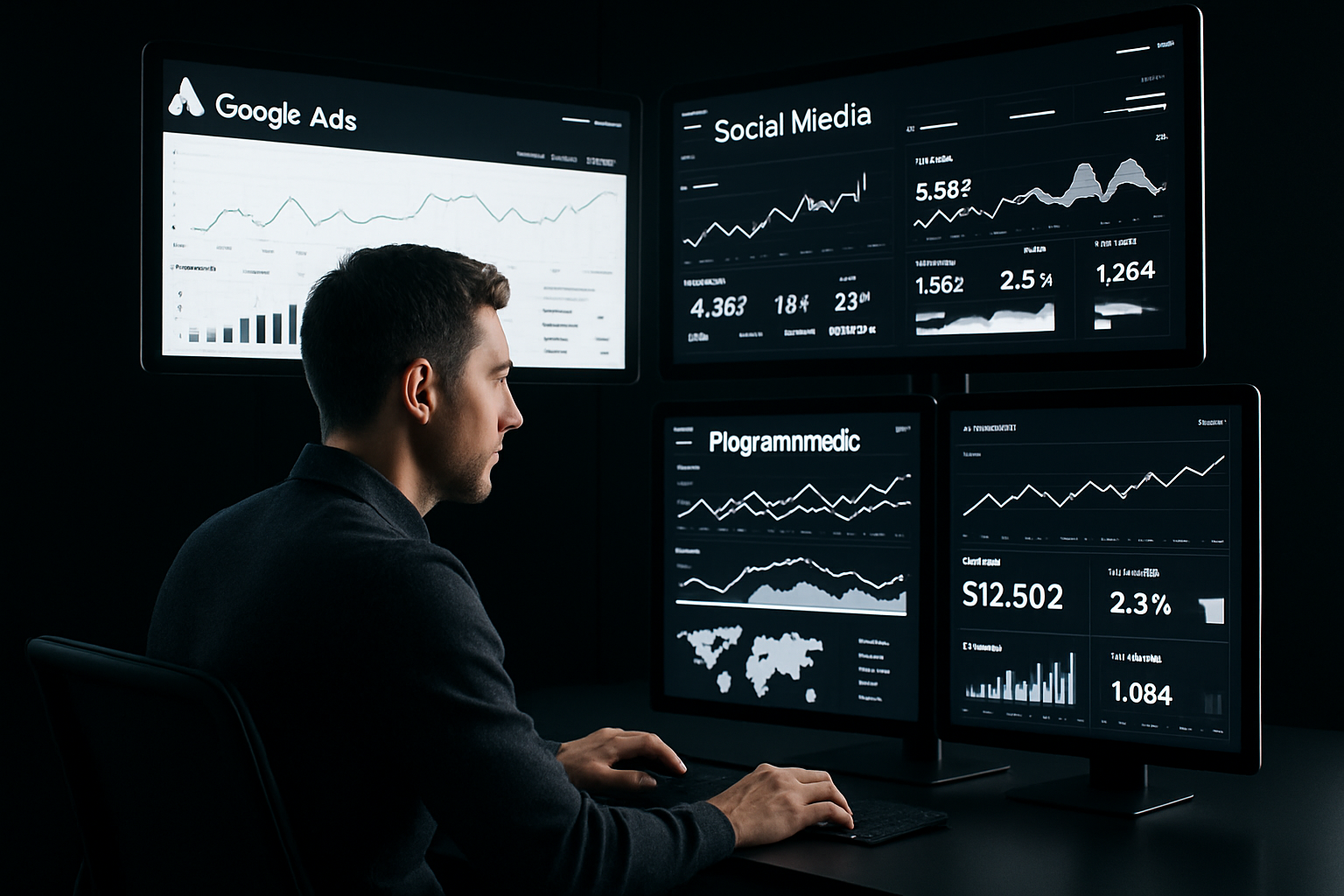
Google and Search Engine Marketing
Google continues to set the standard for online marketing and advertising in 2025. With ongoing updates to Google Ads and search algorithms, brands must stay agile to keep their listings visible. The rise of Performance Max campaigns enables advertisers to reach audiences across all Google networks with AI-driven optimization.
Zero-click searches and evolving user intent are reshaping strategies. Local businesses, in particular, are finding success by leveraging Google Business Profiles for organic and paid visibility. Prioritizing structured data, high-quality content, and responsive ads helps capture traffic as search behaviors shift.
Social Media Advertising (Meta, TikTok, LinkedIn, X)
Social platforms remain at the heart of online marketing and advertising strategies. Meta’s advanced targeting, TikTok’s creative short-form video, LinkedIn’s B2B focus, and X’s real-time engagement all offer unique opportunities. New ad formats—like interactive stories and shoppable posts—are driving deeper engagement.
Influencer partnerships and user-generated content continue to build trust. However, privacy updates and limited tracking require marketers to adapt, relying on first-party data and contextual targeting. TikTok’s average ad engagement rate surpassing 5% highlights the platform’s growing impact.
Programmatic and Display Advertising
Programmatic is revolutionizing online marketing and advertising with real-time bidding and AI-powered targeting. As third-party cookies phase out, contextual targeting is gaining prominence, ensuring ads remain relevant without compromising privacy.
Brands must double down on fraud prevention, using tools to safeguard brand reputation and budget. Implementing brand safety measures and leveraging programmatic platforms’ transparency features helps marketers maximize reach while minimizing risk.
Video, CTV, and Streaming Ads
The growth of video and connected TV (CTV) is transforming online marketing and advertising. Marketers are investing in interactive and shoppable video ads that blend entertainment with commerce. Measuring effectiveness now goes beyond views—engagement and conversion rates are key.
CTV ad spend is set to surge, with 72% of marketers planning increases in 2025. Generative AI is also making video ad creation more accessible, allowing brands to scale creative without sacrificing quality. Streaming platforms offer granular targeting and immersive formats for deeper audience engagement.
Native and Influencer Advertising
Native ads seamlessly integrate with content, making them an essential part of online marketing and advertising. Compliance with disclosure guidelines is non-negotiable, as regulators crack down on unclear sponsorships. Authenticity drives results—partnering with credible influencers can deliver up to 11x higher ROI than traditional ads.
Identifying the right voices and crafting transparent, value-driven messages builds trust. As ad fatigue rises, brands are turning to interactive native formats and micro-influencers to maintain engagement and reach new audiences.
E-commerce and Retail Media Networks
E-commerce platforms and retail media networks are dominating online marketing and advertising strategies for brands seeking high-intent shoppers. Advertising on Amazon, Walmart, and other retail channels now requires integrating ads with social commerce features and optimizing listings for search and conversion.
Retail media ad spend is projected to hit $100B in 2025. For actionable tactics on boosting product visibility and ROI, explore these E-commerce digital advertising strategies. Staying ahead means continuously testing creative, leveraging platform analytics, and adapting to rapid changes in consumer behavior.
Maximizing ROI: Budgeting, Analytics, and Performance Measurement
Staying profitable in online marketing and advertising requires a sharp focus on ROI. As competition heats up in 2025, marketers must be strategic with budgets, analytics, and performance measurement. Let’s break down the essentials for maximizing your returns in this ever-evolving landscape.
Setting and Allocating Budgets
Effective budget allocation is the backbone of successful online marketing and advertising. Start by reviewing historical performance data and aligning your spend with clear business objectives. Diversify your budget across channels to balance risk and opportunity.
- Analyze past campaigns for ROI trends
- Allocate funds to high-performing platforms
- Reserve a portion for testing new channels
With global digital ad spend projected to soar in 2025, it’s vital to stay informed about market trends. For the latest digital ad spend projections and insights, consult Digital marketing statistics 2025.
Attribution Models and Conversion Tracking
Understanding what drives results in online marketing and advertising means implementing robust attribution models. Multi-touch attribution gives credit to every touchpoint in the customer journey, while last-click models focus on the final interaction.
- Use UTM parameters for campaign tracking
- Implement tracking pixels across platforms
- Monitor cross-device and offline conversions
Businesses using advanced attribution tools report up to 20% higher ROI. Choose a model that aligns with your goals and offers actionable insights for optimization.
Key Metrics and Reporting Tools
To master online marketing and advertising, you must track the right metrics. Focus on metrics that reflect real business outcomes, not just vanity numbers.
| Metric | Description | Tool Example |
|---|---|---|
| CAC | Customer Acquisition Cost | Google Analytics 4 |
| LTV | Lifetime Value | Custom dashboards |
| CPA | Cost per Acquisition | Ad platform reports |
| Engagement | Clicks, shares, comments | Social analytics tools |
Leverage platforms like Google Analytics 4 for real-time reporting and monthly frameworks to guide strategic decisions.
Improving Campaign Performance
Continuous improvement is critical in online marketing and advertising. Start by identifying top-performing creatives and scaling them. Use retargeting to re-engage interested users and apply exclusion lists to reduce wasted spend.
- Test new creative variations regularly
- Refine audience targeting for relevance
- Analyze results and iterate quickly
Brands that optimize campaigns consistently can see up to 40% cost reduction and improved ROI.
Staying Agile and Adapting to Change
Agility is a must for online marketing and advertising teams in 2025. Rapid shifts in platforms, algorithms, and consumer behavior demand quick responses. Encourage ongoing learning and use competitor benchmarking to stay ahead.
- Monitor industry updates weekly
- Upskill teams on new tools and trends
- Benchmark performance against top competitors
Agile marketers are 60% more likely to exceed revenue goals, proving that adaptability is the secret weapon for sustained success.
Future Innovations and Emerging Technologies in Online Advertising
The landscape of online marketing and advertising is rapidly evolving, with new technologies reshaping how brands connect with audiences. As we look to 2025, staying ahead means embracing innovation, from artificial intelligence to immersive experiences and blockchain-powered transparency.
Artificial Intelligence and Automation
Artificial intelligence is revolutionizing online marketing and advertising by making campaigns smarter and more efficient. In 2025, AI is central to automating ad targeting, creative generation, and budget allocation. Brands are using predictive analytics to anticipate consumer behaviors and optimize campaigns in real time.
- AI-driven chatbots provide instant, personalized support.
- Automated creative tools produce tailored ad content at scale.
- Predictive analytics help marketers allocate budgets more effectively.
According to recent research, nearly 90% of advertisers will use generative AI to build video ads by 2026, highlighting its growing influence in generative AI in video advertising. These advancements are streamlining online marketing and advertising workflows.
Augmented Reality (AR), Virtual Reality (VR), and Immersive Ads
Immersive technologies are redefining online marketing and advertising by creating engaging, interactive experiences. In 2025, AR and VR ad formats enable brands to offer product demos, virtual try-ons, and interactive storytelling that drive deeper engagement.
- Retailers use AR for virtual fitting rooms and product previews.
- Real estate brands offer VR property walkthroughs.
- Entertainment companies deliver immersive branded experiences.
A recent study revealed that 40% of consumers are more likely to purchase after an AR experience. As these technologies mature, online marketing and advertising will become even more experiential, capturing attention in crowded digital spaces.
Blockchain and Decentralized Marketing
Blockchain is bringing transparency and trust to online marketing and advertising. By verifying ad delivery and reducing fraud, blockchain-powered solutions ensure that ad impressions are genuine and budgets are spent wisely.
- Blockchain tracks every ad impression for full transparency.
- NFT-based campaigns foster loyalty and engagement.
- Decentralized ad networks protect consumer privacy.
Brands leveraging blockchain can verify where their ads are shown and who sees them, minimizing wasted spend. As privacy regulations tighten, decentralized approaches will play a larger role in the future of online marketing and advertising.