
Digital trends are transforming internet advertising at a pace we've never seen before. In 2025, brands that fail to keep up risk falling behind as the landscape shifts.
With global digital ad spending projected to surpass $700 billion, the opportunity for growth is massive. From AI-driven personalization to privacy-first targeting and immersive ad formats, new advancements are redefining what’s possible.
This guide covers the most effective internet advertising strategies and actionable tips for 2025. You'll discover key formats, cutting-edge technologies, smarter targeting, campaign planning steps, and proven ways to optimize results.
Ready to future-proof your marketing? Dive in and start implementing these strategies for measurable growth.
The Landscape of Internet Advertising in 2025
The landscape of internet advertising is evolving at breakneck speed. As we move through 2025, digital channels are not just an option—they are the foundation of effective brand communication. Businesses must understand how internet advertising is changing if they want to stay visible, relevant, and profitable. Let’s explore the trends and platforms shaping the future of digital campaigns.

Evolution and Key Trends
The shift from traditional to digital advertising is undeniable. By 2025, global digital ad spending is set to surpass $700 billion, reflecting how brands prioritize internet advertising to reach modern, connected audiences. This explosive growth is driven by several key forces.
Artificial intelligence, machine learning, and big data are now the backbone of campaign automation and optimization. Marketers rely on AI for everything from predicting user behavior to dynamically adjusting bids in real time. According to global digital ad spending projections, tech companies will continue to dominate as ad budgets rapidly migrate online.
Privacy regulations such as GDPR and CCPA have transformed the landscape, pushing advertisers toward cookieless targeting and greater reliance on first-party data. As third-party cookies fade, contextual targeting and privacy-first strategies are essential for effective internet advertising.
Mobile advertising now claims more than 60% of digital ad spend, reflecting how consumers engage with brands on the go. Video formats are surging, with platforms like YouTube and TikTok setting the pace for in-stream and interactive video ads. New ad types—including shoppable ads, AR/VR experiences, and gamified content—are capturing attention and driving engagement.
Programmatic advertising and real-time bidding have become standard, enabling brands to reach the right user at the perfect moment. Omnichannel strategies are also on the rise, ensuring consistent messaging across devices and touchpoints. For example, YouTube in-stream ads, TikTok video campaigns, and Google Performance Max illustrate how internet advertising adapts to user preferences and behaviors.
Major Platforms and Channels
Choosing the right platforms is critical for successful internet advertising in 2025. The digital ecosystem is dominated by giants like Google Ads, Meta (Facebook/Instagram), YouTube, TikTok, and LinkedIn, each with unique strengths and audience profiles.
Let’s compare some of the top platforms:
| Platform | Reach | Targeting Options | Key Ad Formats |
|---|---|---|---|
| Google Ads | Global, all ages | Keywords, intent, audience | Search, Display, Video |
| Meta (FB/IG) | Billions, broad | Demographics, interests | Stories, Feed, Reels, Carousel |
| YouTube | Massive, diverse | Demographics, interests | In-stream, Bumper, Shoppable |
| TikTok | Gen Z/Millennials | Interests, behaviors | Short video, Hashtag, Shoppable |
| B2B, professionals | Job title, industry, skills | Sponsored Content, InMail |
Each channel offers different targeting capabilities. Meta excels at demographic and behavioral targeting, making it ideal for brands seeking precise audience segments. TikTok, on the other hand, leverages interest-based targeting to connect with trend-driven users through short-form videos.
Programmatic buying via demand-side platforms (DSPs) and ad networks streamlines media buying across multiple sites, optimizing reach and efficiency. Advanced platforms like Google Performance Max combine automation and cross-channel delivery, adapting creatives for maximum impact.
Omnichannel approaches are now essential. Brands that orchestrate campaigns across search, social, video, and display see better engagement and brand recall. The key to internet advertising success in 2025 is understanding each platform’s unique ecosystem and aligning it with campaign goals.
Core Internet Advertising Formats & When to Use Them
Navigating the world of internet advertising in 2025 means understanding the formats that drive results. Each format serves a unique purpose, from building awareness to driving conversions. By choosing the right approach, brands can unlock the full potential of their internet advertising efforts.
Display & Banner Advertising
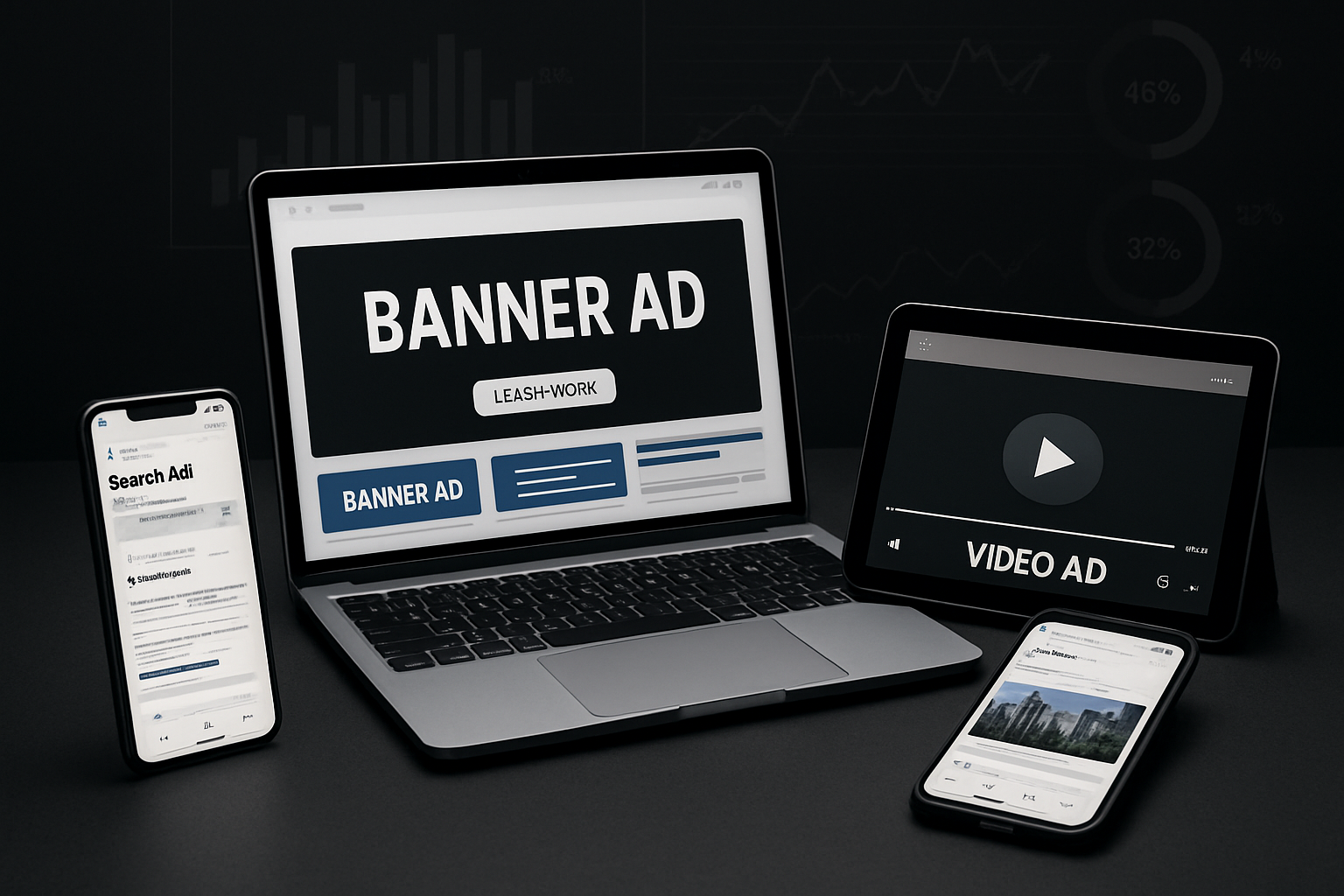
Display and banner advertising remains a staple in internet advertising, offering static, animated, and interactive ad types. These ads appear across websites, apps, and platforms, making them ideal for brand awareness campaigns.
Placement strategies fall into two categories: site-direct buys, where brands select specific sites, and programmatic placements, which use algorithms to optimize reach. Programmatic has surged in popularity, improving targeting and efficiency.
Best practices include:
- Using a clear call-to-action (CTA)
- Maintaining brand consistency
- Optimizing for mobile devices
For example, the Google Display Network enables widespread reach for internet advertising campaigns. According to industry data, display ads continue to be a top choice for boosting brand recognition. For deeper insights into display strategies, explore Digital advertising strategies in Madrid.
Search Engine Marketing (SEM)
Search engine marketing (SEM) is a powerhouse in internet advertising, focusing on paid search (PPC) to capture high-intent traffic. SEM allows advertisers to bid on keywords, ensuring their ads appear when users are actively searching for related products or services.
Effective keyword research and smart bidding strategies are essential in 2025. Leveraging tools to find high-converting keywords and using automated bidding can maximize return. Ad extensions—such as site links and callouts—boost visibility, while optimized landing pages enhance conversion rates.
Google Ads’ Performance Max campaigns exemplify how SEM can drive results. Notably, search ads often deliver an average ROI exceeding 200%, making them a cornerstone of internet advertising success.
Social Media Advertising
Social media advertising is a dynamic aspect of internet advertising, providing access to vast audiences on platforms like Facebook, Instagram, LinkedIn, TikTok, Pinterest, and X. These platforms offer advanced targeting by demographics, interests, behaviors, and lookalike audiences.
Creative ad formats include Stories, carousels, Reels, and sponsored posts. Instagram Reels Ads, in particular, are effective for engaging Gen Z, while LinkedIn offers precise B2B targeting.
Social ad spend is projected to account for 35% of digital ad budgets in 2025, reflecting its growing impact. Social media advertising enables brands to connect with users in their daily digital routines, driving both awareness and conversions in internet advertising.
Video & Native Advertising
Video and native advertising are rapidly gaining momentum in internet advertising, thanks to their engaging and less intrusive nature. Video ads come in several forms: in-stream (before or during content), out-stream (within articles), and shoppable video that links directly to products.
Native ads blend seamlessly with surrounding content, appearing as in-feed posts, sponsored articles, or advertorials. This integration boosts engagement and reduces ad fatigue.
For example, YouTube bumper ads and sponsored content on news sites drive higher interaction rates. Studies show video ads achieve twice the engagement of static formats, making them essential for brands aiming to stand out in internet advertising.
Email, Affiliate, and Influencer Marketing
Email, affiliate, and influencer marketing round out the core formats of internet advertising. Targeted email campaigns use segmentation, automation, and personalization to deliver relevant messages to subscribers.
Affiliate marketing relies on performance-based partnerships, where affiliates promote products for a commission. Accurate tracking and transparent commission models matter for success.
Influencer marketing taps into trusted voices—micro and macro influencers—to reach new audiences authentically. For instance, product launches via influencer collaborations on TikTok often generate buzz and drive sales. Email marketing continues to deliver an impressive $36 ROI for every $1 spent, solidifying its place in effective internet advertising.
Step-by-Step: Building a Winning Internet Advertising Campaign in 2025
Launching a successful internet advertising campaign in 2025 is no longer just about setting ads live and hoping for the best. It’s a strategic, step-by-step process that empowers brands to reach the right audience, optimize spend, and drive real results. Let’s walk through each critical phase so you can confidently build campaigns that outperform the competition.

Step 1: Define Goals & KPIs
Every internet advertising campaign needs a clear destination. Start by pinpointing your main objective—brand awareness, lead generation, direct sales, or customer retention. Use the SMART framework to set goals that are Specific, Measurable, Achievable, Relevant, and Time-bound.
Next, determine which key performance indicators (KPIs) will measure your success. Common KPIs in internet advertising include click-through rate (CTR), cost per acquisition (CPA), return on ad spend (ROAS), and total conversions. For instance, you might target a 20% increase in qualified leads from LinkedIn Ads or aim to reduce your CPA by 15% over the quarter.
A quick table for reference:
| Objective | Possible KPIs |
|---|---|
| Awareness | Impressions, CTR |
| Leads | Conversion Rate, CPA |
| Sales | ROAS, Revenue |
| Retention | Repeat Purchases |
Step 2: Audience Research & Segmentation
To maximize the impact of your internet advertising, you must understand who your ideal customers are and how to reach them. Analyze your CRM and analytics data to build detailed buyer personas. Use first-party data and AI-powered insights to uncover audience preferences, pain points, and online behaviors.
Segment your audience based on demographics, psychographics, intent signals, and digital touchpoints. For example, you can retarget website visitors who abandoned their shopping carts or create lookalike audiences from your most loyal customers. This granular approach ensures each internet advertising message is relevant, timely, and engaging.
Step 3: Platform & Format Selection
Choosing the right platforms and ad types is crucial for internet advertising success. Match your campaign objectives to the strengths of each channel. Google Search is ideal for intent-driven buyers, while Instagram Reels or TikTok are perfect for brand storytelling and engaging younger audiences.
Consider a cross-channel approach to guide prospects through the funnel. For example, start with awareness on YouTube, nurture with retargeting on Facebook, and close with a personalized email offer. Carefully select formats—display, video, carousel, or native ads—to align with both your goals and audience preferences.
Step 4: Creative Development & Messaging
Compelling creative is the lifeblood of internet advertising. Craft ad copy and visuals tailored to each platform and audience segment. Focus on clear, concise messaging, strong calls-to-action, and mobile-first design.
A/B testing is essential: experiment with headlines, images, and CTAs to see what resonates best. Leverage dynamic creative optimization tools to personalize ads at scale based on user behavior. This approach keeps your internet advertising fresh and relevant, fueling higher engagement and conversions.
Step 5: Budgeting & Bidding Strategies
Smart budgeting ensures your internet advertising dollars work harder. Allocate spend based on previous performance data, channel effectiveness, and business priorities. Explore automated bidding strategies—like cost-per-acquisition (CPA) or target ROAS—to optimize for your chosen KPIs.
Tactics such as dayparting (scheduling ads during peak times) and real-time bid adjustments can help you stretch your budget further. Continually monitor spend and pivot as needed to capitalize on top-performing channels and formats.
Step 6: Campaign Launch & Real-Time Optimization
Once your internet advertising campaign is live, the real work begins. Set up robust tracking with pixels and conversion events to monitor performance in real time. Check daily reports to spot trends, adjusting targeting, creative, or bids whenever necessary.
Pause or revise underperforming ads, and reallocate budget to winners. Many platforms now offer AI-powered recommendations for optimization—take advantage of these tools to refine your internet advertising as the campaign unfolds.
Step 7: Measurement, Reporting & Iteration
After your internet advertising campaign runs, dive deep into the results. Use analytics dashboards to compare performance against your original KPIs. Identify what worked, what fell short, and why.
Generate actionable insights to inform future campaigns. Regularly iterating based on data leads to continuous improvement. For more tips on leveraging analytics and business intelligence in your campaigns, check out these business intelligence and analytics insights.
Remember, the most successful internet advertising strategies are built on a cycle of measurement, learning, and agile adaptation.
Advanced Strategies for Maximum ROI
Staying competitive in internet advertising demands more than the basics. Advanced strategies are transforming campaigns from good to exceptional, unlocking higher returns and future-proofing your approach. Let’s explore the innovations driving maximum ROI in 2025.
AI, Automation & Personalization
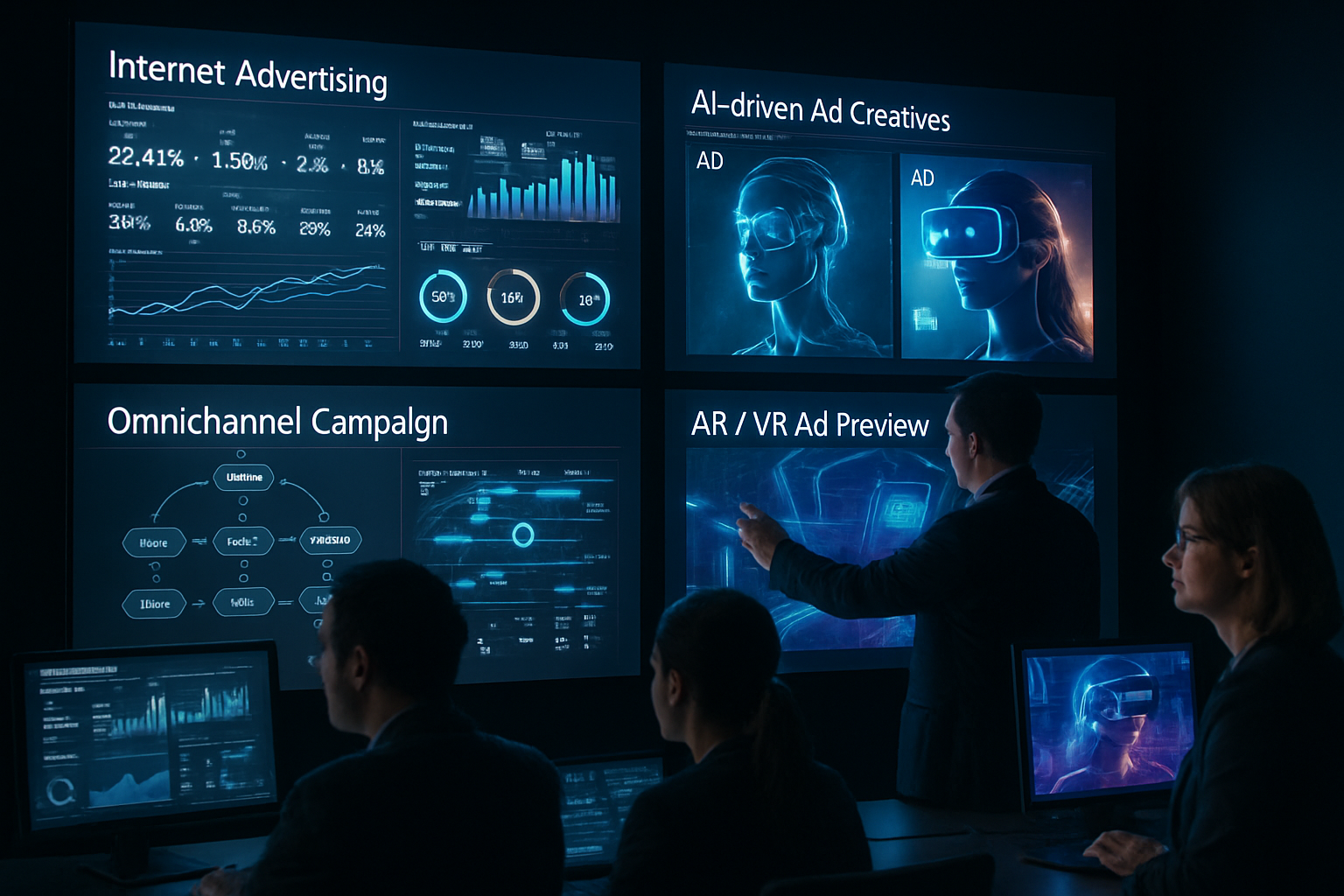
Artificial intelligence is rewriting the rules of internet advertising. AI enables predictive targeting, generates creative assets, and optimizes bidding in real time. By analyzing user behavior, machine learning personalizes ads at scale, delivering relevant messages to each individual.
Dynamic product ads now adapt instantly to a user’s interests, leading to higher engagement. In fact, personalized ads can boost click-through rates by over 30%. According to AI's impact on advertising by 2025, brands leveraging AI-driven strategies are poised for industry-leading growth.
With these tools, internet advertising becomes more efficient, effective, and measurable.
Privacy-First Targeting & Cookieless Solutions
As privacy regulations tighten, internet advertising is evolving. The phase-out of third-party cookies means marketers must rely on first-party data and contextual targeting.
Server-side tracking and privacy-compliant retargeting protect user data while maintaining campaign performance. Google’s Privacy Sandbox and Facebook’s Aggregated Event Measurement are setting new standards for privacy-first advertising.
Embracing these solutions ensures your internet advertising stays both effective and compliant in a changing digital landscape.
Omnichannel & Cross-Device Strategies
Modern consumers interact with brands across multiple touchpoints. Omnichannel strategies in internet advertising connect the dots between web, mobile, social, email, and even offline channels.
Unified measurement tools track user journeys and attribute conversions accurately. For example, a user might see a social ad, receive an email follow-up, and complete a purchase on mobile.
This seamless integration enhances brand consistency and maximizes ROI for internet advertising campaigns.
Interactive, Immersive & Shoppable Ads
Internet advertising in 2025 is all about engagement. Interactive video, AR/VR experiences, and shoppable posts invite users to participate, not just observe.
Platforms like Instagram Shopping and TikTok Shop let users buy products directly within the ad. AR try-on ads allow virtual product sampling.
Research shows interactive ads can increase dwell time by up to 47%. These formats keep internet advertising fresh, memorable, and conversion-focused.
Emerging Channels & Technologies
New frontiers in internet advertising are opening fast. Connected TV (CTV), over-the-top (OTT) streaming, digital audio, and in-game ads are capturing attention.
| Channel | Key Benefit | 2025 Growth |
|---|---|---|
| CTV/OTT | Large, engaged audiences | +20% YoY |
| Digital Audio | Intimate, mobile reach | Rapid |
| In-Game Ads | High Gen Z engagement | Expanding |
Running internet advertising on platforms like Spotify, Twitch, and digital out-of-home (DOOH) displays unlocks untapped audiences and creative formats.
Best Practices & Common Pitfalls to Avoid
In the fast-paced world of internet advertising, even small missteps can lead to wasted budgets or missed opportunities. As 2025 unfolds, brands must not only deploy the latest tactics but also avoid common pitfalls that could undermine their campaigns. Let’s explore proven best practices and the most frequent mistakes to help you maximize every ad dollar.
Best Practices for Success
To thrive in internet advertising, prioritize a mobile-first approach. With mobile driving over 60% of ad spend, design creatives that load fast and display flawlessly on smartphones and tablets.
Always use clear, direct calls-to-action (CTAs) in every ad. A compelling CTA guides users toward your desired outcome, whether it’s a purchase, signup, or download.
Regular testing is crucial. Implement continuous A/B testing for headlines, visuals, and offers to discover what truly resonates. Brands that adopt ongoing experimentation often see ROI gains of 50% or more.
Stay compliant with privacy regulations like GDPR and CCPA. Monitor policy updates across platforms to avoid costly penalties.
Align your ad messaging with the landing page experience. Consistent messaging improves trust and conversion rates.
For more ongoing insights and trends, check out the Digital marketing blog resources to stay ahead in internet advertising.
Common Mistakes and How to Fix Them
Many advertisers struggle with over-targeting or casting their net too wide. Both extremes can cause wasted spend and poor results. Use data-driven segmentation to find the right audience balance.
Neglecting creative refresh is another major pitfall. Running the same ads too long leads to ad fatigue and declining engagement. Update visuals and copy regularly to maintain interest.
A surprising number of campaigns fail to track conversions properly. Always set up analytics and tracking pixels before launch to measure real performance.
Another frequent issue is ignoring negative feedback or low relevance scores. Respond promptly to user comments and monitor platform quality metrics.
Underutilizing automation and AI tools can leave valuable efficiencies on the table. Smart automation can optimize bidding, targeting, and reporting in real time.
If your campaigns rely heavily on social platforms, explore Social media management insights to avoid channel-specific missteps in your internet advertising mix.
Staying vigilant about these pitfalls and following best practices will help your internet advertising deliver stronger, more consistent results in 2025.
Measuring Success: Analytics, Attribution & Optimization
Tracking and optimizing your internet advertising performance is the key to sustainable growth in 2025. With so many platforms and evolving strategies, effective measurement ensures your campaigns stay on course and deliver real results.
Key Metrics to Track
Success in internet advertising starts with tracking the right metrics. Core indicators include impressions, clicks, CTR, CPC, CPA, ROAS, and conversion rates. For video and social campaigns, monitor engagement, completion rates, and view-through conversions.
Comparing metrics across platforms—like cost per lead on LinkedIn versus Facebook—reveals which channels drive the best results. As AI-driven trends shape the industry, it's vital to monitor new metrics. For example, AI-driven search ad spending trends show how machine learning is redefining campaign efficiency for advertisers.
Staying on top of these numbers helps businesses make smarter decisions and maximize every dollar spent.
Attribution Models & Multi-Touch Analysis
Understanding how your internet advertising influences conversions requires more than last-click attribution. Today’s customer journey is complex, often involving multiple touchpoints.
Explore models like linear, time-decay, and data-driven attribution to see how each interaction contributes. Multi-touch analysis in tools like Google Analytics 4 enables marketers to assign value across the entire path, not just the final click.
This holistic view ensures you recognize the true impact of each channel. By refining attribution, brands can allocate budgets more effectively and uncover hidden opportunities in their internet advertising strategies.
Continuous Optimization Techniques
Optimization is not a one-time task—it’s an ongoing process. Use real-time analytics dashboards to spot trends and shifts in your internet advertising campaigns as they happen.
Schedule weekly audits to identify underperforming segments, and automate reporting for faster, data-driven decisions. Techniques like A/B testing creative, adjusting bids, and refining targeting can yield significant improvements.
Teams that embrace continuous optimization often achieve 25% or more in cost savings. Integrating AI-powered recommendations from platforms ensures your campaigns stay competitive in the rapidly changing internet advertising landscape.
Staying Ahead: Learning & Adapting
The digital landscape never stands still, so staying ahead in internet advertising means constant learning. Monitor the latest industry trends, competitor moves, and platform updates to keep your strategies sharp.
Invest in ongoing training and encourage experimentation with new formats and technologies. Early adoption of innovations—such as generative AI for video ad creation—often yields outsized returns and keeps your brand relevant.
By fostering a culture of curiosity and agility, you ensure your internet advertising efforts remain effective and future-proof, regardless of how quickly the market evolves.