
Digital advertising is transforming faster than ever, and by 2025, the stakes for businesses are sky-high. Navigating this dynamic landscape demands more than just ad spend—it requires smart, data-driven strategies built for rapid change.
This guide is your roadmap to mastering digital advertising. Inside, you'll uncover the latest trends, discover essential channels, learn step-by-step campaign strategies, explore advanced tactics, and find out how to measure and future-proof your approach.
As digital advertising explodes with new tools, channels, and opportunities, those who stay ahead will boost their visibility, conversions, and growth. Ready to outpace your competition? Dive in and future-proof your digital advertising strategy today.
The Digital Advertising Landscape in 2025
The digital advertising landscape in 2025 is more vibrant and complex than ever. Global ad spend is climbing to record heights, as brands race to capture consumer attention across a fragmented digital ecosystem. According to Digital Advertising Growth Statistics, digital advertising spend is projected to surpass all previous years, reflecting its critical role in business growth and customer engagement.
What’s driving this surge? The answer lies in a convergence of transformative trends reshaping digital advertising. Artificial intelligence now powers sophisticated ad targeting and creative optimization. Automation is streamlining campaign management, making it easier to adjust bids, audiences, and creative in real time.
Privacy regulations like GDPR and CCPA, combined with the shift toward a cookieless future, are forcing advertisers to rethink tracking and targeting. Brands must now prioritize transparency and consent, while leveraging first-party data for personalization.
The explosion of new ad formats is also impossible to ignore. Beyond traditional banners, marketers are embracing interactive, AR, and shoppable ads. These engaging formats boost user interaction and conversion rates, keeping digital advertising fresh and effective.
Ad inventory is expanding rapidly. Search, social, video, streaming, audio, and digital out-of-home (DOOH) platforms all offer unique opportunities. As consumers hop between devices and platforms, advertisers must master cross-device attribution and seamless omnichannel strategies to stay relevant.
Let’s break down the trends shaping digital advertising in 2025:
| Trend | Description |
|---|---|
| AI & Automation | Smarter targeting, dynamic creative, and automated bidding |
| Privacy & Compliance | Navigating GDPR, CCPA, and the cookieless landscape |
| Innovative Ad Formats | Interactive, AR, shoppable, and immersive experiences |
| Expanded Inventory | Ad opportunities across search, social, video, streaming, DOOH, audio |
| Consumer Behavior Shifts | Multi-device journeys, demand for personalization, and rising ad fatigue |
Market leaders like Google, Meta, Amazon, and TikTok continue to dominate digital advertising, but new entrants and niche platforms are emerging. Advertisers are experimenting with alternative channels to reach audiences who are increasingly fragmented and selective.
An omnichannel presence is no longer optional. Cross-device attribution is critical, as 89% of buying journeys begin with a search engine and 70% of consumers have purchased after seeing a YouTube ad (WordStream). Brands that blend search, social, video, and display can connect with consumers at every stage of the funnel.
Consider how leading brands are leveraging multi-channel strategies. For example, an ecommerce company might use paid search to capture high-intent shoppers, retarget visitors with display ads, and engage new audiences through TikTok and Instagram reels. By aligning messaging and measurement across channels, they maximize reach and ROI.
In summary, digital advertising in 2025 demands agility, data-driven decisions, and a willingness to embrace new tools and formats. Brands that adapt quickly and put the customer journey at the center of their strategies will thrive in this ever-evolving landscape.

Core Digital Advertising Channels and Formats
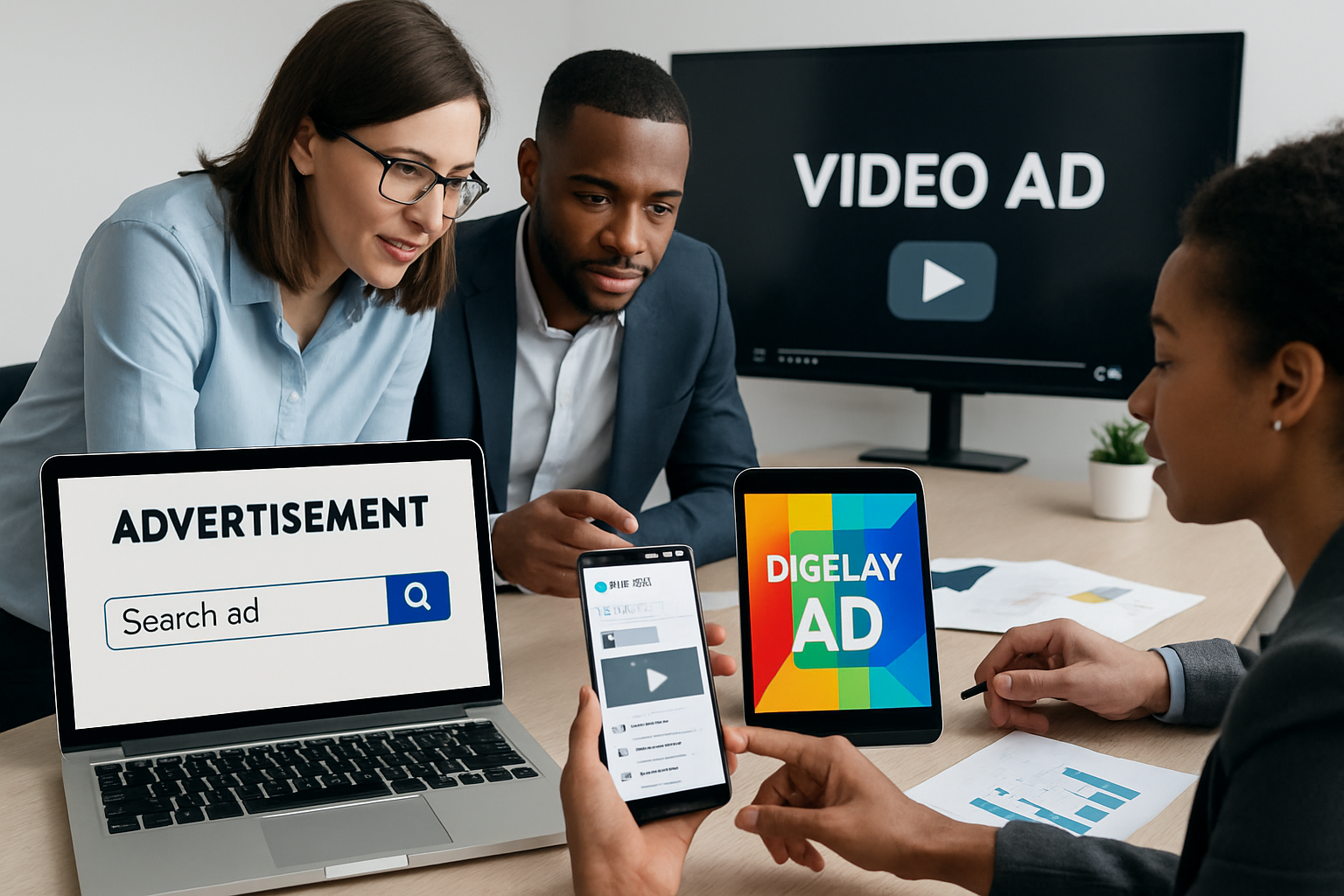
Navigating the world of digital advertising in 2025 means understanding the core channels and choosing the right blend for your business. Brands have more options than ever, from search and social to immersive video and interactive display. The key is aligning your digital advertising approach with your goals, target audience, and budget while staying nimble as new formats emerge.
Let’s break down the four essential channels, highlight their unique strengths, and explore how they can work together for maximum impact.
Search Advertising in 2025
Search advertising remains a cornerstone of digital advertising, evolving rapidly through AI and automation. In 2025, responsive search ads and smart bidding strategies help marketers reach users at the exact moment of intent. Platforms like Google and Bing continue to dominate, while shopping and local inventory ads make it easier for ecommerce brands to connect with nearby buyers.
Keyword research is more sophisticated, leveraging intent signals and machine learning for precision targeting. Automation streamlines campaign management, yet human oversight ensures messaging stays relevant and compelling.
Did you know that 65% of clicks from commercial intent searches go to paid ads? This highlights why search remains so vital for conversions. For those looking to deepen their expertise, the SEM and search advertising articles section offers practical insights and strategies tailored to the latest trends.
Display Advertising: Beyond Banners
Display advertising has moved far beyond static banners. In 2025, programmatic buying, retargeting, and dynamic creative optimization enable brands to reach users with personalized messages at every stage of the funnel. The Google Display Network and Amazon DSP provide immense reach, while interactive and animated formats capture attention in crowded spaces.
Display ads are especially powerful for building brand awareness and nurturing prospects who have visited your site. In fact, 27% of users search for a business after seeing a display ad, proving the channel’s influence on discovery and consideration.
Creative trends now favor immersive experiences—think interactive banners, personalized product showcases, and animated visuals that tell a story. For digital advertising success, integrating display with other channels amplifies your overall reach.
Social Media Advertising: Platforms and Innovations
Social media advertising is a driving force in digital advertising, with platforms continuously rolling out new creative formats and targeting capabilities. Facebook, Instagram, LinkedIn, TikTok, and X (Twitter) cater to diverse audiences, offering options like stories, reels, carousels, and shoppable posts.
Advanced targeting makes it possible to reach users based on interests, behaviors, and lookalike profiles. Facebook’s granular audience segmentation and high engagement rates are particularly noteworthy. In the US, 78% of consumers have made purchases after discovering products on Facebook, underscoring the channel’s power.
Brands are also embracing influencer partnerships and user-generated content to foster authenticity. For local businesses, region-specific digital advertising can drive both online and in-store conversions, making social a must-have in your strategy.
Video & Streaming Media Advertising
Video advertising is at the heart of digital advertising innovation, capturing attention across YouTube, TikTok, and streaming platforms. YouTube remains the world’s second-largest search engine, making it a go-to for education, engagement, and conversion.
OTT (over-the-top), CTV (connected TV), and in-stream video ads offer marketers rich storytelling options. Out-stream formats ensure visibility even outside traditional video content. In 2025, sound-off creative and short-form storytelling are critical for capturing multi-tasking audiences.
The impact of video is undeniable—88% of people purchase after watching a brand video, and 70% have bought after seeing a YouTube ad. Shoppable video, live streams, and interactive overlays are blurring the line between content and commerce, cementing video’s role in every digital advertising mix.
Step-by-Step: Building a Winning Digital Advertising Strategy
Crafting a successful digital advertising campaign in 2025 requires a clear, methodical approach. The landscape is more competitive and complex than ever, so following a structured process is essential for maximizing ROI and staying ahead. Let’s break down the seven critical steps every marketer and brand should take to build a winning strategy.
Step 1: Define Objectives and KPIs
Every digital advertising strategy starts with clear, measurable objectives. What are you aiming to achieve—brand awareness, website traffic, lead generation, sales, or loyalty? Set SMART KPIs (Specific, Measurable, Achievable, Relevant, Time-bound) to benchmark progress and guide decisions.
For example, an ecommerce brand might target a 20% increase in online sales through paid campaigns. Use a table to clarify your KPIs:
| Objective | KPI | Target Value |
|---|---|---|
| Online Sales | Conversion Rate | 5% |
| Brand Awareness | Impressions | 1M |
Aligning digital advertising goals to business outcomes ensures every campaign has a clear purpose and measurable success.
Step 2: Audience Research and Segmentation
Understanding your audience is the bedrock of effective digital advertising. Dive into first-party data, analytics, and market research to identify high-potential segments. Build detailed personas that reflect customer demographics, interests, and behaviors.
Map out the customer journey across devices to uncover touchpoints. Use lookalike and retargeting audiences to extend reach and nurture prospects. For instance, segmenting users by purchase history or engagement level allows for tailored messaging and improved conversion rates.
A well-segmented digital advertising campaign ensures you speak directly to the right people at the right time.
Step 3: Channel and Format Selection
Selecting the right mix of channels and ad formats is crucial for digital advertising success. Match platforms to your goals and audience behavior—search for high-intent actions, social for discovery and engagement, video for storytelling.
Balance your budget across core channels like search, display, social, and video, while testing emerging formats such as audio and AR. Consider the latest Advertising Trends to Watch in 2025 to stay ahead of changing consumer habits.
For example, B2B SaaS brands may focus on LinkedIn for lead generation, while ecommerce brands tap into Instagram shoppable ads for direct sales.
Step 4: Creative Development and Messaging
Compelling creative is the heartbeat of digital advertising. Develop copy and visuals tailored to each platform, using personalization to make ads relevant and engaging. Dynamic creative optimization allows you to test headlines, images, and CTAs for maximum impact.
Storytelling is powerful—use emotional triggers and authentic testimonials in your video and social ads. Responsive search ads, interactive banners, and video testimonials all help to boost engagement.
Remember, in digital advertising, creativity drives clicks and conversions.
Step 5: Campaign Setup and Launch
Organizing your campaign structure is vital for digital advertising efficiency. Group ads by themes, set clear budgets, and define targeting parameters. Don’t forget to install tracking pixels, conversion events, and UTM parameters for accurate measurement.
Automate where possible—set up rules for bidding, budget pacing, and performance alerts. For example, launch a multi-channel campaign with synchronized messaging across platforms to amplify reach.
A well-executed launch sets the stage for digital advertising success from day one.
Step 6: Measurement, Analytics, and Optimization
Ongoing measurement is a cornerstone of digital advertising. Use platform analytics and third-party tools to monitor performance metrics like impressions, clicks, conversions, ROAS, and CPA.
A/B test different creatives, audiences, and bidding strategies to uncover what works best. Regularly analyze data to adjust bids, pause underperforming ads, and reallocate budget to high-performing segments.
Continuous optimization ensures your digital advertising campaigns stay efficient and effective as market conditions evolve.
Step 7: Compliance, Privacy, and Brand Safety
In 2025, digital advertising must prioritize compliance and brand protection. Stay current with privacy regulations such as GDPR and CCPA, ensuring your campaigns respect user consent and data rights.
Implement brand safety tools to avoid placements alongside inappropriate content. Update consent management and adapt to the cookieless future with privacy-first solutions.
A compliant, brand-safe digital advertising strategy builds trust with customers and protects your reputation in an evolving regulatory landscape.
Advanced Tactics for Maximizing Digital Advertising ROI
As the digital advertising landscape evolves, staying ahead means adopting advanced tactics that drive higher ROI. In 2025, brands that embrace innovation and data-driven approaches will outpace competitors. Let’s explore the most effective methods to maximize every ad dollar and set your campaigns apart.

AI and Automation in Campaign Management
Artificial intelligence is transforming digital advertising by handling complex tasks with precision. From automated bidding to dynamic audience segmentation, AI streamlines campaign management and uncovers hidden opportunities. Platforms like Google’s Performance Max and Meta Advantage+ use machine learning to optimize results in real time.
AI also powers contextual advertising, allowing brands to reach users based on content relevance rather than cookies. For a deeper dive into these advancements, see AI in Contextual Advertising.
By automating routine processes, marketers free up time for strategy and creative development. The result? More efficient digital advertising campaigns and improved performance.
Personalization and Dynamic Creative Optimization
Personalization is now essential for digital advertising success. Dynamic creative optimization enables brands to serve unique ads based on user data—behavior, demographics, or even context. This tactic tailors messaging to individual preferences, increasing engagement and conversions.
For ecommerce, dynamic product ads automatically showcase inventory relevant to each user. Marketers leverage tools that test multiple ad variations, identifying top performers for every audience segment.
Personalized digital advertising not only boosts ROI but also enhances customer experience, fostering long-term brand loyalty.
Cross-Channel and Omnichannel Strategies
Consumers interact with brands across multiple platforms and devices. Omnichannel strategies ensure digital advertising is consistent, coordinated, and seamless. Marketers integrate campaigns across search, social, display, video, and even offline channels.
Unified measurement and attribution models track the customer journey, providing insights into what drives conversions. For example, a user might discover a product on Instagram, research it via Google, and complete the purchase through a retargeting ad.
A cross-channel approach increases touchpoints, maximizes reach, and delivers a cohesive brand experience in digital advertising.
Leveraging First-Party Data and Customer Insights
As third-party cookies fade, first-party data becomes the backbone of digital advertising. Brands collect data directly from customer interactions—website visits, purchases, and loyalty programs—to create detailed audience profiles.
Customer data platforms (CDPs) centralize this information, enabling precise targeting and personalized messaging. Marketers can build lookalike audiences, retarget previous buyers, and deliver offers that resonate.
Using first-party insights leads to smarter digital advertising decisions and stronger campaign performance.
Creative Trends: Interactive, AR, and Shoppable Ads
Creative innovation is redefining digital advertising. Interactive formats—such as polls, quizzes, and playable ads—encourage user participation, boosting engagement rates. Augmented reality (AR) and virtual reality (VR) ads provide immersive experiences, allowing consumers to visualize products in real time.
Shoppable ads streamline the path to purchase, letting users buy directly from videos or social posts. Platforms like Instagram and YouTube are leading the way with these features.
Brands that embrace creative trends stand out in the crowded digital advertising space, capturing attention and driving action.
Measurement, Attribution, and Incrementality
Accurate measurement is vital for maximizing digital advertising ROI. Marketers are moving beyond last-click attribution, adopting data-driven and multi-touch models that reflect the true impact of each channel.
Incrementality testing, such as geo-lift or conversion lift studies, helps isolate the effect of advertising from organic growth. These methods ensure ad spend is allocated to channels that genuinely drive business outcomes.
By refining measurement strategies, brands can continuously optimize digital advertising campaigns for greater efficiency and effectiveness.
Case Studies and Real-World Examples
Real-world success stories best demonstrate how digital advertising drives business growth. In 2025, brands across industries are leveraging innovative tactics and multi-channel approaches to outpace their competition. Let’s dive into four standout examples and see what practical lessons they offer for your digital advertising strategy.
Ecommerce Brand: Multi-Channel Sales Surge
An ecommerce retailer sought to boost online sales using a mix of Google Shopping ads and Facebook retargeting. By aligning product feeds with search intent and serving personalized ads to cart abandoners, the brand increased sales by 30% in one quarter. Their digital advertising approach paired automation with manual bid adjustments for high-value products, ensuring optimal ROI. The campaign’s success highlights the power of cross-channel synergy and precise audience targeting.
B2B SaaS: Qualified Leads at Scale
A B2B SaaS company wanted to generate more qualified leads. They invested in LinkedIn Sponsored Content targeting decision-makers and layered in programmatic display ads for wider reach. Using account-based marketing lists and dynamic creative, they achieved a 40% lift in conversion rates. This digital advertising strategy demonstrated that, with the right mix of channels and content, even specialized audiences can be reached efficiently.
Local Retailer: Driving Foot Traffic
A local retailer in Oviedo aimed to increase in-store visits. Their team used geo-targeted mobile ads and Google Local campaigns to reach nearby shoppers at peak times. By tracking store visits through mobile location data, the business saw a 25% uptick in foot traffic. For more on location-based strategies, see Digital advertising in Oviedo. This example proves digital advertising isn’t just for ecommerce—it’s vital for brick-and-mortar success.
DTC Brand: Viral Product Launches
A direct-to-consumer brand launched a new product using TikTok challenges and Instagram Reels. Their engaging, short-form video content went viral, earning millions of views and a 50% increase in social-driven sales. The digital advertising team focused on authentic storytelling and influencer partnerships, turning user engagement into measurable growth.
| Campaign Type | Channel Mix | Result |
|---|---|---|
| Ecommerce | Google Shopping, Facebook | +30% sales |
| B2B SaaS | LinkedIn, Programmatic | +40% conversion |
| Local Retailer | Geo-mobile, Google Local | +25% foot traffic |
| DTC Brand | TikTok, Instagram Reels | +50% social sales |
Lessons Learned:
- Multi-channel digital advertising unlocks new growth.
- Personalization and automation drive higher returns.
- Location-based targeting bridges online and offline success.
- Creativity and storytelling are key to viral campaigns.
These case studies show that digital advertising continues to evolve, offering endless possibilities for brands willing to innovate and adapt.
Future-Proofing Your Digital Advertising Strategy
In 2025, brands face an ever-evolving digital advertising landscape where agility and foresight are critical. To stay ahead, marketers must future-proof their digital advertising strategies with robust tactics that anticipate industry shifts and consumer expectations.
Embracing a Cookieless Future with First-Party Data
As third-party cookies fade, digital advertising success hinges on developing strong first-party data strategies. Brands are investing in customer data platforms and contextual targeting to maintain precise ad targeting while respecting privacy. Building direct relationships with your audience—through loyalty programs, email sign-ups, and interactive content—ensures you have reliable data to power campaigns. This approach not only safeguards compliance but also builds trust with your customers.
Staying Agile and Adapting to Change
The digital advertising ecosystem is in constant motion. Platforms update algorithms, regulations evolve, and consumer preferences shift rapidly. Marketers must continuously monitor trends and pivot strategies as needed. For example, adapting digital advertising approaches to regional markets, such as those seen in Digital advertising in Gijon, can help brands connect with local audiences and capture emerging opportunities. Agile teams test new channels, adjust creative, and reallocate budgets quickly to maximize ROI.
Continuous Learning and Building Brand Resilience
Success in digital advertising now demands a culture of ongoing learning. Stay updated on the latest ad formats, tools, and regulatory changes by following industry reports like the 2025 Digital Media Trends Report. Resilient brands prioritize transparency, authenticity, and value-driven messaging to foster deeper connections with audiences. AI-driven creative testing enables businesses to adapt their messaging based on real-time insights, ensuring relevance as preferences evolve.
Ongoing Experimentation and Innovation
Innovation is the heartbeat of effective digital advertising in 2025. Brands that thrive are those willing to experiment with new formats, such as shoppable video and interactive ads. Consider these future-proofing tips:
- Test new platforms and emerging ad formats regularly.
- Leverage retargeting strategies, as 92% of marketers report display ads perform as well or better than search marketing.
- Use data-driven creative testing to refine messaging.
- Promote a mindset of ongoing experimentation within your team.
By embracing change, investing in first-party data, and staying agile, your digital advertising strategy will remain resilient and ready for whatever the future brings.